April 2026: Sofas to Soaps—Without Harmful Chemicals
In this edition:
- Flashback to 2015: Happiness is a new couch…without flame retardants!
- Scientists Warn Antibacterial Soaps and Wipes Can Fuel Superbugs
- Regrettable Substitutions: The Next Wave of Systemic Insecticides
- A Safer & Better Mosquito Repellent is On the Market
- The Antimicrobial Science Roundup
- Green Science Policy Institute in the News
- Calendar
I hope you are enjoying the longer days and flowers of the spring. At the Green Science Policy Institute, we continue to work to stop the unnecessary use of harmful chemicals and have much to share.
Great news that the UK—the only large country in the world still requiring flame retardants in furniture—is moving towards following California's lead and stopping the need for flame retardants in furniture foam. Their new proposed flammability standard would replace their current open-flame standard, met with the heavy use of toxic flame retardants, with a smolder standard that maintains fire safety without the need for these harmful chemicals.

Please check out this excellent article from the UK Sunday Times, which explains more and also features our Institute's leadership in stopping the use of flame retardants in U.S. furniture. The U.S. story is also told in the memorable documentary "Toxic Hot Seat." If you didn't catch its original release in 2013, it is now available for free on YouTube.
The UK furniture flammability consultation is open for public comments until June 23, 2026, and I encourage you to submit your support for the proposal here.
Last month, we co-authored a viewpoint in Environmental Science & Technology with an international team of scientists on the serious and growing problem of antimicrobial resistance (AMR). When bacteria and other microbes evolve to resist drugs designed to kill them, infections become harder to treat and lifesaving antibiotics can lose their effectiveness.
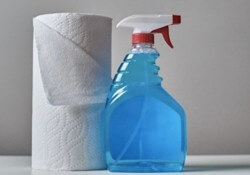
We warn that antibacterial soaps, wipes, sprays, and other "germ-killing" consumer products may be fueling this crisis, despite offering no added health benefit in most everyday settings. We call on the World Health Organization to explicitly address reducing the use of these products in the next update of its Global Action Plan on AMR. The viewpoint was widely covered, from the Toronto Star to Fox News. More details are below.
Our Senior Fellow Joel Tickner is also doing important work in the sustainable chemistry space. On April 22, Change Chemistry and the Sustainable Chemistry Catalyst at UMass Lowell, where Joel serves as a strategic advisor, will release a new report: Incentivizing Sustainable Chemicals: A Policy Framework for Innovation, Manufacturing, and Market Transformation, developed over 12 months with more than 50 companies across sectors and the value chain. A webinar presenting the findings will be held April 22 at 11am EST. You can register here.
The following day, April 23, I am honored to be speaking in conversation with Robin Bass to keynote the Women in Green Breakfast, hosted by the U.S. Green Building Council California during San Francisco Climate Week. This year's theme is "Scaling Resilience through Generational Mentorship." If you will be in San Francisco, I would love to see you there.
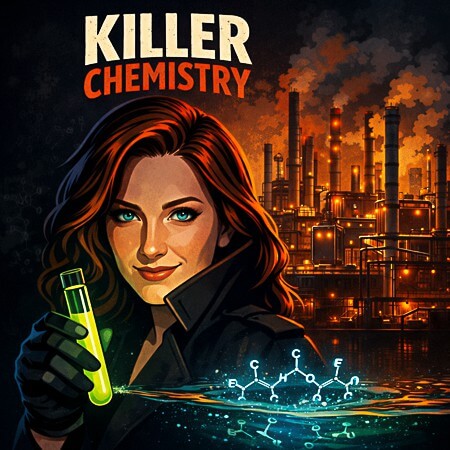
Finally, I recommend the Killer Chemistry podcast, hosted by investigative journalist Callie Lyons, who first brought the problem of PFAS to a wide audience with her 2007 paradigm-shifting book Stain‑Resistant, Nonstick, Waterproof, and Lethal: The Hidden Dangers of C8.
Callie’s podcast discusses how PFAS enter our water, bodies, and communities, and how chemical manufacturers responded when the evidence of their responsibility caught up with them.
With kind regards and best wishes for a happy spring,
Arlene and the Green Science Policy team
P.S. If you check out the UK Sunday Times with the good news about the UK moving away from toxic flame retardants in their furniture, you can see a picture of me with my cat Midnight who had very high levels of these harmful chemicals and hyperthyroid disease.
Flashback to 2015: Happiness is a new couch…without flame retardants!

By Caroline Clarke
In 2012, when I started working at the Green Science Policy Institute, I learned that our decrepit couches contained flame retardants that could contribute to health problems and didn’t provide a fire safety benefit. I wanted to replace these old couches right away but had to wait for the new TB117-2013 standard.
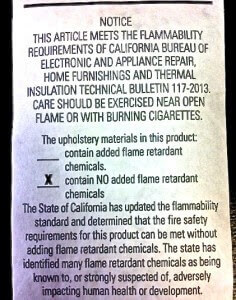
How long did I have to wait? 3 years! When my husband and I recently bought a new couch, I wanted to be sure it wouldn’t contain any flame retardants. The store manager emailed me a copy of the couch label stating “contains no added flame retardant chemicals.” Yay! Now we have a new couch without flame retardants and everyone is happy – apart from the dogs, who are not supposed to jump up (but still do).
Scientists Warn Antibacterial Soaps and Wipes Can Fuel Superbugs
By Rebecca Fuoco
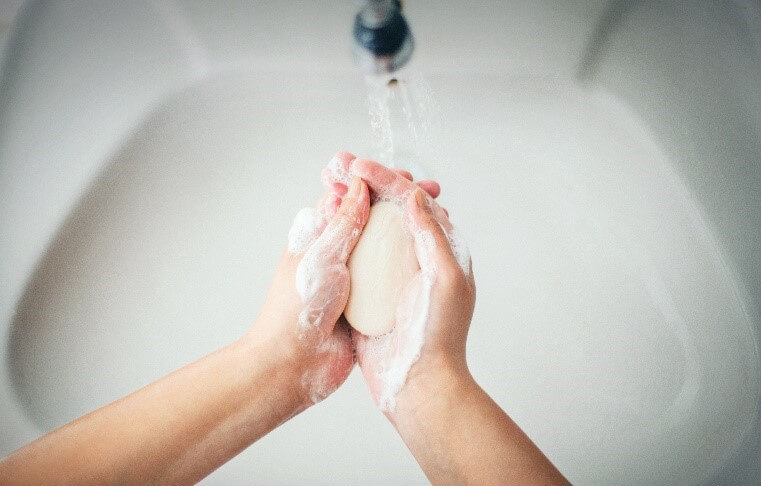
The Institute and an international team of scientists is warning in our viewpoint in Environmental Science & Technology that everyday antibacterial soaps, wipes, sprays, and other “germ‑killing” products are quietly contributing to the global rise of antimicrobial resistance (AMR) while providing no added health benefit for most consumer uses.
Antibiotic-resistant infections already cause more than one million deaths worldwide each year and could rival cancer as a leading cause of death by 2050, according to the United Nations Environment Program.
Most global AMR prevention efforts have focused on antibiotic overuse in healthcare and agriculture. Our Viewpoint highlights growing evidence that biocides commonly used in household products—such as quaternary ammonium compounds (QACs) and chloroxylenol—can promote resistance among bacteria not only to the chemicals themselves but also to vital antibiotic medicines.
QACs and other biocides are added to antibacterial hand soaps, disinfecting wipes and sprays, laundry sanitizers, and more, and their use surged during the COVID-19 pandemic and remains elevated today. We summarize studies showing that environmental levels of these chemicals cause resistant bacteria to spread, promote cross-resistance to important antibiotics, and cause lasting genetic changes to microbes, including the exchange of resistance genes. Over time, these shifts can allow resistant strains to dominate. This translates to the spread of antibiotic-resistant genes that threaten the effectiveness of necessary antibiotics and can contribute to rising deaths.
Major health authorities—including the U.S. Food and Drug Administration, U.S. Centers for Disease Control and Prevention, and World Health Organization— recommend handwashing with plain soap and water rather than antibacterial soap for the general public.
In our Perspective entitled, Targeting Biocide Overuse in Consumer Products Will Strengthen Global AMR Action, we call on the World Health Organization to include consumer‑product biocides in their next Global Action Plan. We also urge national governments to restrict antimicrobial ingredients in household products when there is no evidence of efficacy, and to conduct public awareness campaigns to counter the myth that antibacterial products are needed for everyday cleanliness.
Regrettable Substitutions: The Next Wave of Systemic Insecticides
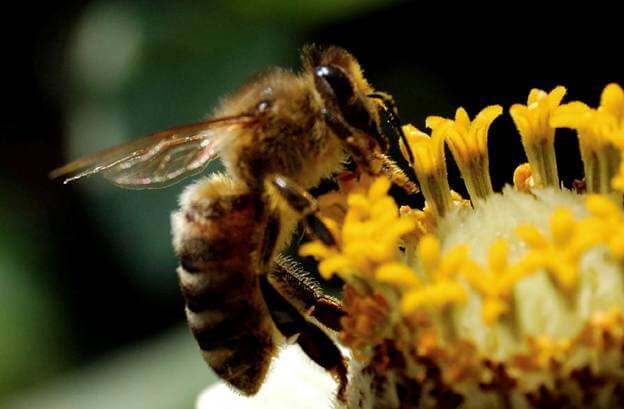
Neonicotinoid (“neonic”) insecticides were once seen as a major advance—until their harmful effects on bees became impossible to ignore. These included large-scale bee kills as well as subtle, long-term impacts that weakened entire colonies. Now, a new generation of insecticides is being promoted as the solution.
But this shift follows a familiar pattern known as regrettable substitution: replacing one harmful chemical with another that carries many of the same risks. Early signs suggest we may be repeating the cycle rather than fixing the problem.
Among these newer chemistries are the diamide insecticides, including chlorantraniliprole and cyantraniliprole. These compounds target insect muscle function and are widely used for crop protection. While they differ mechanistically from neonics, they share key traits that matter ecologically—most notably, long environmental persistence and systemic activity. Once applied, they move through the plant’s vascular system and are expressed in pollen and nectar, creating continuous exposure pathways for pollinators. Combined with extended persistence, this means bees may encounter these chemicals not just during application, but for weeks or months afterward.
An additional and often overlooked concern is synergistic toxicity. In real-world agricultural settings, insecticides are rarely used in isolation. Diamides, for example, are frequently marketed in combination with other classes such as pyrethroids. These mixtures can produce effects that are greater than the sum of their parts—meaning toxicity to insects, including pollinators, can be significantly amplified beyond what would be predicted from exposure to either compound alone. Such interactions are rarely captured in regulatory testing, which focuses on single active ingredients rather than the combinations that bees actually encounter in the field.
The scale of colony losses observed in 2025 underscores how much remains unknown about the real-world impacts of these newer insecticides. Closing those knowledge gaps will require more comprehensive testing—particularly of chronic, low-dose, and combined exposures that reflect field conditions. At the same time, waiting for perfect data is not a viable option. Proactive measures to reduce reliance on persistent, systemic insecticides and to prioritize pollinator-safe practices are essential if we are to avoid repeating the large-scale losses that have already reshaped beekeeping in recent years.
Honey bees affected by neonicotinoid insecticides have impaired immune function, reduced foraging and navigation abilities, and compromised reproductive capacity.

Systemic pesticides used on agricultural land create unavoidable hazards, as these toxic chemicals end up in the pollen, nectar, and surface waters consumed by pollinators.
A Safer & Better Mosquito Repellent is On the Market
The latest Safer Made newsletter featured the company, Mimikai, which has launched the first new EPA-registered mosquito repellent based on a new and innovative active ingredient in 25 years. “Seven years of research, testing, and persistence led to the market launch of its undecanone-based formula that is safer and more effective than DEET,” says Safer Made.
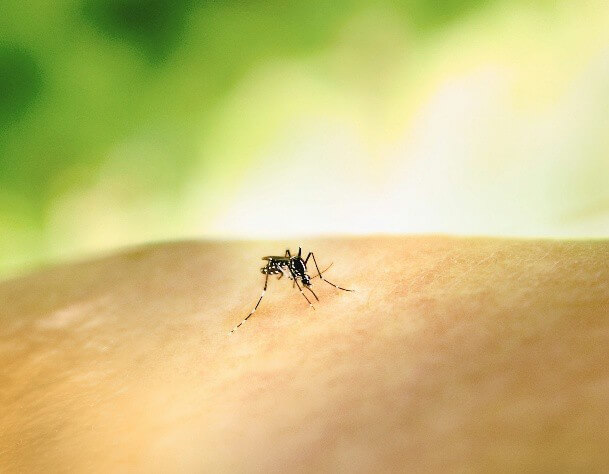
Mimikai was included in Fast Company’s annual list of the World’s Most Innovative Companies of 2026. Mimikai is available online, through Amazon, in REI stores, at Credo Beauty, at Grove Collaborative, and in other locations, both physical and online.
We are grateful for all the great work Safer Made is doing to bring better products to the consumer market.
The Antimicrobial Science Roundup
By Rebecca Fuoco
More and more studies are being published on the harms—and often, lack of benefit— of antimicrobials but are flying under the radar. In these newsletters we will be sharing notable new peer-reviewed research related to quaternary ammonium compounds (QACs) and other antimicrobials used in consumer products.
In the past month, there have been studies published finding links to reproductive, respiratory, neurological, cardiovascular, and skin harms as well as antimicrobial resistance. Check them out here.
Green Science Policy Institute in the News

By Rebecca Fuoco
Below are recent news articles, blogs, podcasts, newsletters, and more that have featured our Institute’s work and expertise.
- AMR Viewpoint: Toronto Star, Fox News, mindbodygreen, The Microbiologist, Earth.com, Study Finds, News Medical, and Open Access Government.
- The Sunday Times highlighted how Arlene and the Institute were instrumental in changing U.S. furniture flammability standards and influencing ongoing reforms abroad.
- “Studying the tens of thousands of chemicals on the market today one at a time is just not feasible, but evaluating six groups of chemicals of concern is much more manageable,” Arlene explained to Mongabay in an article about our Six Classes approach.
- “The bottom line is that you often don’t need to disinfect your home. You just need to clean your home,” Rebecca told Time magazine in an article about bleach.
- Arlene explained to New York Magazine that manufacturers don’t use chemical flame retardants in foam produced for mattresses because it’s not an effective way to meet flammability standards,
Calendar
Wednesday, April 22, 2026 at 11am EST
Webinar on Incentivizing Sustainable Chemicals: A Policy Framework for Innovation, Manufacturing, and Market Transformation. Register here.
Wednesday, April 22, 2026, Berkeley, California
Arlene Blum will speak about her pioneering mountain expeditions in Nepal during Annapurna: A Generational Legacy, a day-long celebration of Nepal's spectacular Manang Valley at Berkeley's International House when “the Himalayas come to Berkeley on Earth Day.”
Register at www.eventbrite.com/e/1980927248726 using the 50% discount code FriendOfArlene. For further information, contact [email protected].
Thursday, April 23, 2026, The Women's Building, San Francisco, California
Arlene and Robin Bass will have a fireside chat to keynote the US Green Building Council Women in Green Breakfast during SF Climate Week—bringing together leaders across sustainability, climate, and the built environment for connection, conversation, and impact. For breakfast, fireside chat keynote, leadership panel, curated networking: Register here.
May 16 & 17 2026, Berkeley, California
Annual Berkeley Himalayan Fair
Live Oak Park, 1300 Shattuck Avenue at Berryman, North Berkeley
Enjoy the food, music, dance, crafts and arts during this free Himalayan Festival. Contact Arlene--who started the Fair 43 years ago after enjoying festivals while walking across the Himalayas for ten months--if you would like to volunteer to help at the Fair or at her booth under the big tree across from the stage. More information here.
Receive Updates By Email
Subscribe to our monthly newsletter and get these updates delivered right to your inbox!