Aug 2026: Safer Sofas for Ireland — Is the UK next?
In this edition:
- Harmful Antimicrobial Products on Back-to-School Lists
- Powdered or Liquid Laundry Soap?
- Remote Island PFAS Mystery
- Notes from the Helsinki Chemicals Forum
- The Antimicrobial Science Roundup
- Green Science Policy Institute in the News
- Calendar
I hope you’re enjoying the summer. After a snorkeling vacation exploring the rich coral reefs of Alor, a remote island in Indonesia, I returned home to excellent news. Ireland has announced it’s updating its 30-year-old furniture flammability standard so that flame retardants will no longer be needed! Furnishings, people, and the environment in Ireland should be healthier as a consequence.
And the UK is similarly considering a new standard for furniture flammability that would stop the need for flame retardants in furniture there.

Ireland and the UK are the only countries that require flame retardants in upholstered furniture. Our Institute has been supporting them in moving away from the unnecessary use of these harmful chemicals, just as we helped update the California standard so flame retardants are no longer needed in US furniture.
I am happy to share with you that California’s State Fire Marshal wrote the UK government about the fact that average furniture related fire deaths decreased by 31% after California changed its standard away from flame retardants. The benefits of the new standard for both health and fire safety provides a strong contrast to past flame retardant industry claims that stopping the use of flame retardants in furniture would greatly increase fire deaths.
The Fire Marshal wrote:
"We respectfully encourage policy makers in the United Kingdom to consider California's experience as one example of how modern flammability standards can maintain a high level of public safety while reducing dependence on chemical flame retardants."
And even more encouragement comes from a recent California Department of Public Health study that we helped initiate finding that replacing flame retardant furniture cut levels of the harmful flame retardant PentaBDE by half in resident's bodies in just 15 months.
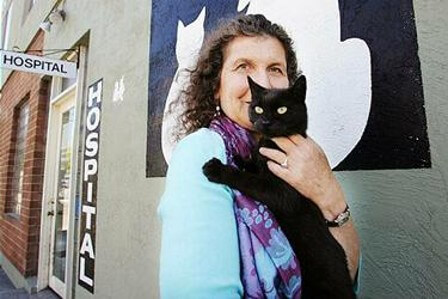
Finally, a front page story from the Sunday London Times (including a photo of my cat with very high PentaBDE levels in her blood) gives the detailed dramatic story of the UK standard proposed change.
These furniture flammability standard changes in California, Ireland, and the UK are a win-win for fire safety and health.
In the U.S., numerous epidemiological studies found that children have lost an average of four IQ points from exposure to pentaBDE, one of the most common furniture flame retardants, and people with the highest levels were 300% more likely to die of cancer than those with lower levels. You can learn more on our website, an excellent article in The Guardian, and the memorable documentary "Toxic Hot Seat." which is now available for free on YouTube.
Our Institute, with our scientific and NGO colleagues, hope to make similar progress in reducing the unnecessary use of antimicrobials, another class of chemicals marketed for health and safety even though many uses lack science to support these claims. With back-to-school season approaching, take a look below to see whether unnecessary and harmful antimicrobial products are included in your children’s supply lists.
Also, please check out our new antimicrobial science database with links to peerreviewed studies on antimicrobial resistance as well as reproductive, neurological, developmental and dermal harm.
Recently, the Consumer Product Safety Commission (CPSC) asked for comments until August 24 on a new national safety standard for lithium-ion batteries in e-bikes which includes a provision leading to the use of flame retardants in the plastic battery enclosures. We plan to comment opposing this provision, given the lack of a proven fire safety benefit and the potential for health harm of flame retardants in electronics cases. If you’d like to submit a comment, you can learn more on our website and in our ES&T viewpoint.
Enjoy the remaining weeks of summer,
Arlene and the Green Science Policy Institute team
P.S. If you have administrative experience—or know someone who does—and would like a paid position to work with me in person on admin tasks for a few hours one evening each week, please email me.
Harmful Antimicrobial Products on Back-to-School Lists
By Rebecca Fuoco
If you have a child heading back to school, check their supply list.

Don’t be surprised if you see disinfecting wipes and/or antibacterial hand soap. Why are they on so many lists? Part of the reason is that Clorox and Dial are paid brand partners of TeacherLists, containing a template used by many schools as for their back-to-school supply lists. Their current lists include Clorox disinfecting wipes and Dial antibacterial hand soap.
Most disinfecting wipes use quaternary ammonium compounds (QACs), which are US EPA registered pesticides which warn against children exposure. QACs have been linked to respiratory and skin harms in humans, as well as reproductive, developmental, and neurological harms in animal studies. They can also contribute to antimicrobial resistance. They don’t belong on school supply lists, and state health departments agree. For example, Vermont’s Department of Health issued guidance against adding disinfecting wipes to school supply lists, warning that disinfecting wipes are “unsafe for classroom use.” The Washington State Department of Health’s school supply list guidance advises against disinfecting wipes, instead recommending fragrance-free baby wipes, alcohol wipes, paper towels with soap, or microfiber towels. New Jersey’s health department says that teachers should not bring disinfecting wipes into classrooms.
Disinfection does have a legitimate but narrow role in schools, including cleaning areas contaminated by bodily fluids and meeting certain health-code requirements. Those jobs should be handled with appropriate products and protections by trained custodial staff.
Antibacterial hand soap also doesn’t belong on these lists. In addition to health concerns about their ingredients (which are either QACs or chloroxylenol), there is consensus among the FDA, CDC, and WHO that they have no benefit over plain soap for community settings. The American Academy of Pediatrics advises that children should use plain soap rather than antibacterial soap. As such, Washington State says schools should use plain, non-antibacterial soaps.
If your child’s list contains disinfecting wipes or antibacterial hand soap, consider emailing this blurb (including hyperlinks) to the principal.
Powdered or Liquid Laundry Soap?
Marty Mulvilhill, Safer Made & Green Science Policy Advisory Board member
When shopping for laundry soap at your local grocery store, consider reaching down to the bottom shelf for a powdered detergent rather than the liquid one at eye level. You may be surprised to learn that powdered detergents and bar soaps are more effective cleaners than liquids and use less plastic packaging. They are also safer and more sustainable.

Liquid formulations of detergents, soaps, and cleaning products packaged in plastic bottles first appeared in the 1970s, taking advantage of affordable plastic packaging and chemical preservatives. However, the surfactants, builders, and solvents, needed to make a stable liquid product decrease the efficacy of the cleaning agents.
If you are looking for products with more sustainable packaging and without harmful chemicals (including antimicrobials such as benzalkonium chloride or other QACs with names ending in -nium chloride), the answer may be sitting on the bottom shelf in the supermarket. Consider switching from liquids to solids and be wary of detergent sheets which also rely on additional polymers and additives that don't help you clean and may harm the environment.
In summary, powder and solid soaps are a better choice: they use less plastic packaging, preservatives, and other chemicals of concern – and they are more effective.
Remote Island PFAS Mystery
By Caroline Clarke
A recent Guardian investigation may have unearthed the answer to an island’s pollution mystery. Utility data from 2024 showed that Fair Isle, the southernmost of the Shetland Islands, had higher levels of PFAS in the public drinking water than any other area of Scotland. Since there were no obvious industrial sources of these “forever chemicals” on the Island, the high levels surprised locals and scientists alike.

Analyzing the water data, scientists concluded that the elevated levels of PFAS most likely arrived on the Island after being carried thousands of miles in sea spray and foam. The accumulation of PFAS is particularly high because the very small Island is exposed to stormy sea spray.
Bo Sha, an environmental chemist at Stockholm University, identified sea spray as a major source of water to air transfer of PFAS in two Norwegian coastal towns in her 2021 paper. “We think of the ocean as the ultimate sink: the only really effective way to remove persistent pollutants, but with PFAS it’s like a pump that keeps pushing chemicals to the surface,” she said.
Although PFAS levels in Scotland's drinking water remain below current safety standards, these findings highlight concerning gaps in environmental monitoring. The Scottish Environment Protection Agency has not published updated PFAS monitoring data since 2019 and the UK has no comprehensive program to monitor airborne PFAS.
Sadly, Fair Isle is not the only remote island facing high levels of PFAS. Similar findings have been recorded in Scotland's remote lochs, Danish coastal groundwater, as well as Antarctic seabirds.
And closer to home, researchers from North Carolina State University analyzed PFAS in sea foam and seawater collected along the Atlantic coast near Wilmington, North Carolina, and found that sea foam contained far higher concentrations of PFAS than the surrounding seawater.
To better understand the extent of PFAS contamination in geographically isolated regions, scientists recommend expanded monitoring of coastal air and water. And for all the latest PFAS news and scientific research check out our PFAS Central website.
Notes from the Helsinki Chemicals Forum
By Meredith Williams, Green Science Policy Senior Fellow
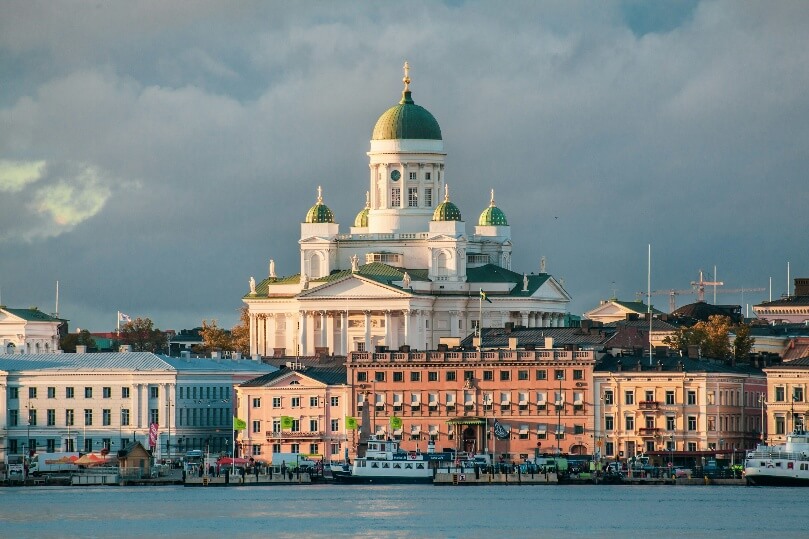
Europe can be seen as a model for strong environmental protection, showing how government, NGOs, and businesses can work together for safer chemicals. In April, I attended the Helsinki Chemicals Forum-- a two-day conference of chemical manufacturers, European regulators, academics, advocates, and consumer product manufacturers.
Since 2009, it has served as a venue for hearing a broad range of perspectives and creating dialog around moving toward a safer chemicals industry
Now, the European chemicals industry faces challenges of high energy and feedstock costs, and aging infrastructure, compounded by overcapacity in Asia. High energy prices were problematic even before the Iran war. This was the backdrop for this 16th forum. I heard speakers question the effectiveness of Europe’s pioneering chemicals policy REACH: does weak enforcement create an unlevel playing field that manufacturers outside the EU exploit? While there was discussion about reducing the sector’s climate impacts and calls for less burdensome regulations, there was little discussion of benefits of safer chemicals. Although Europe’s Chemical Industry Action Plan acknowledges the need for safer substitution, their emphasis is on decarbonization and regulatory streamlining. This is a shift from past European positions. The retrenchment as the industry suffers multiple stressors is apparent, and European-based NGOs warn there is less willingness to take precautionary approaches and that past gains are threatened.
Despite the more conservative tone, the dialogue at the Forum still allows for a broad exchange of ideas that’s less common here in the U.S. The EU continues to take a long view and sets forth strategies commensurate with today’s environmental challenges. The Biodiversity Strategy for 2030, the Bioeconomy Strategy, the Zero Pollution Action Plan and its associated Chemicals Strategy for Sustainability and Circular Economy Act map out actions and timelines to address the biodiversity, climate, and pollution crises simultaneously. Here in the U.S. we haven’t named these as crises, let alone establish governmental roadmaps to address them. There’s much to learn from Europe. Whether the EU continues to model a way forward depends on whether these commitments move forward or are compromised in the face of an industry under duress.
The Antimicrobial Science Roundup
By Rebecca Fuoco
More and more studies are being published on the harms—and often, lack of benefit— of antimicrobials but are flying under the radar. In these newsletters we will be sharing notable new peer-reviewed research related to quaternary ammonium compounds (QACs) and other antimicrobials used in consumer products.
In the past month, there have been studies published finding links to antimicrobial resistance as well as developmental, reproductive, neurological, and dermal harm. See our filterable, growing database here.
Green Science Policy Institute in the News
By Rebecca Fuoco
Below are recent news articles, blogs, podcasts, newsletters, and more that have featured our Institute’s work and expertise.
- Arlene was interviewed by SFGate about Governor Newsom's veto of SB-682, the bill that would have phased out PFAS in cookware. She expressed disappointment and gave readers tips for reducing exposure.
- Wired pointed readers to PFAS Central as a resource for choosing rain and snow gear without added chemicals.
- Our joint study finding harmful flame retardants in virtually every car tested and our work to fix the outdated vehicle flammability standard at the root of the problem were featured in Consumer Reports.
- Simply Recipes recommended PFAS Central as a resource for finding cooking or kitchen products without PFAS.
- Earth911 noted that U.S. carpet manufacturers stopped using PFAS in domestic production starting in 2019, citing our case study.
Calendar
Sunday, October 4, 2026, 1-5 PM Pacific,
Vancouver, British Columbia, Canada
Arlene Blum will lead a workshop entitled "Science to Policy Change for Healthier People & Planet" at the 2026 International Society of Exposure Science (ISES) Annual Meeting. More information here.
Receive Updates By Email
Subscribe to our monthly newsletter and get these updates delivered right to your inbox!