December 2025: Toxic-free Trees and Guiltless Gifts
In this edition:
- Frying Pans Strike Back
- Healthy Holiday Shopping Hints
- O Christmas Tree, O Christmas Tree, How Sustainable Canst Thou Be?
- Green Chemistry Needs More than a Business Case
- New Research Flags Risks of Antimicrobials—But Few Notice What Emerging Science Reveals About Antimicrobial Hazards
- Green Science Policy Institute in the News
We trust you had an enjoyable Thanksgiving vacation and are perhaps beginning to think about future holidays. You can find below our suggestions for gifts and trees for a healthier and more sustainable holiday season.
I’m just back from Portland, Oregon, where I presented talks at the Society of Environmental Toxicology and Chemistry (SETAC) conference. My objective was to encourage scientists publishing their research to make a communication plan to share their findings with other scientists and the public; and also to directly contact decision-makers so that their research can have more impact in protecting public health.
I also shared a legal strategy that has already restored more than $700 million in wrongfully withheld scientific research funding to scientists across all ten UC campuses. This legal strategy could help scientists beyond the UC system reclaim their resources and continue their research to protect our health and environment. Please contact me if you would like more information.
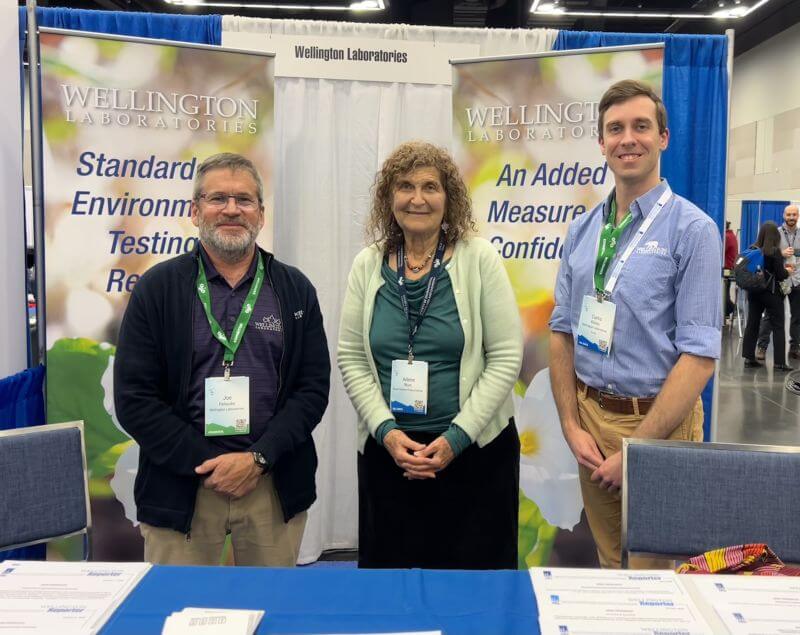
While at the SETAC meeting, I stopped by the booth of Wellington Laboratories, a company that produces reference analytical standards used for environmental research. Their team shared that our monthly newsletters help them stay ahead of new chemical concerns. After the conference, they wrote a very nice LinkedIn post: "Arlene's ongoing commitment to sharing environmental issues in a balanced, scientifically sound manner helps broaden awareness across the field." It was heartening to learn that our newsletters can inform our readers of new scientific developments to advance their work. We have enjoyed producing these newsletters since 2007 and we will continue to do so!
Another highlight of the SETAC meeting was a moving keynote talk about the removal of three dams on the Klamath river and the immediate resurgence of the salmon runs. Amy Bowers Cordalis of the Yurac tribe shared the inspirational story of her indigenous family's 170 year long-- and ultimately successful--struggle to save the salmon, the health of the river and their way of life. I will be giving her beautiful narrative, The Water Remembers, as a holiday gift.
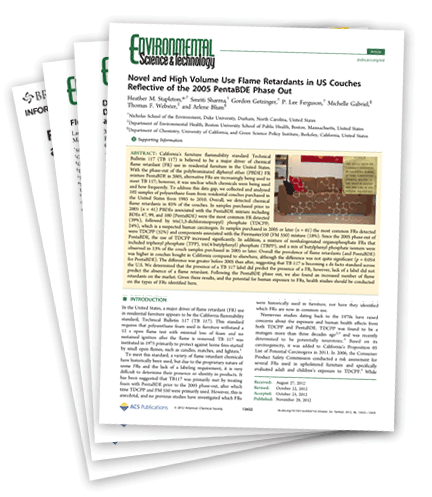
I especially appreciated meeting with the editor-in-chief of two leading environmental science journals. We discussed our paper, Effective Communication Strategies to Increase the Impact of Environmental Health Research, which documents how publicizing research papers is critical for reaching a wide audience and also leads to more scholarly citations. The editor plans to share our results and our communication strategy at an upcoming meeting with other journal editors—a promising step toward wider adoption of communication practices to translate research into policy change to protect public health.
Just before heading to Portland, I delivered a well-received TEDx talk at the Plastic Pollution Coalition’s “Great Pacific Garbage Patch” event in Los Angeles. The talk explored how reducing harm from the Six Classes of chemicals of concern—often found in plastic products—can protect our health. I look forward to sharing a link to my talk when it’s available, likely in the next newsletter.
Meanwhile, we are continuing to speak with staff in the U.S. House and Senate to build momentum for Congress to direct the National Highway Traffic Safety Authority (NHTSA) to begin updating their 1971 standard that results in cancer-causing flame retardants in our cars. Our good news is we have considerable support from both parties in the House and the Senate in time for inclusion in the 2026 Surface Transportation Reauthorization.
Wishing you a very happy and healthy holiday season, Arlene and the Green Science Policy team
P.S. Curious about the adventures that inspire our work at the Institute? My memoirs Breaking Trail: A Climbing Life and Annapurna: A Woman's Place tell these stories and provide good holiday reading or gifts. Visit ArleneBlum.com to learn more.

Frying Pans Strike Back
By Carolyn Said
California Governor Gavin Newsom’s recent veto of a statewide PFAS ban in cookware gave the nonstick cookware industry a powerful talking point in their battles against similar state bans. Since then, cookware makers and allied chefs have amplified a narrow message: an undamaged Teflon (PTFE—a form of PFAS) pan used at moderate heat is safe for the home cook. That claim—technically accurate—has become the centerpiece of a broad industry pushback as many states are moving to restrict all PFAS (“forever chemicals”), including Teflon, in consumer products.
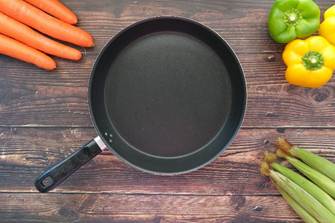
Minnesota, Maine, and New Mexico all have enacted laws banning cookware with intentionally added PFAS. Minnesota’s sweeping “Amara’s Law,” is facing a federal lawsuit from the Cookware Sustainability Alliance (CSA), while Maine and New Mexico are moving toward rulemaking and enforcement under their own statutes. These efforts are part of a national patchwork of regulations as multiple states pass laws to curb PFAS use.
Industry resistance has taken three forms: lawsuits challenging state authority, public campaigns featuring celebrity chefs who profit from cookware lines using PTFE, and messaging that PTFE behaves differently from other PFAS and that properly used Teflon pans don’t harm consumers. Newsom’s veto, widely cited by opponents, is used to argue that sweeping bans go too far.
But public-health advocates note that the debate shouldn’t center on what happens in the kitchen. PFAS’ major harms are along their life cycle—manufacturing releases, environmental persistence, and contaminated water and soil, rather than from home cooks using intact nonstick pans. PFAS never break down, accumulate in the environment, and have been linked to cancers, immune and developmental harm.
The core policy question is whether to allow Teflon pans because the risk of using them properly is relatively low—or to eliminate them to prevent the far larger harms created before and after the pan ever reaches the stovetop.
And for holiday gifts, we suggest pans of seasoned or enameled cast iron (like Le Creuset), or stainless steel.
Healthy Holiday Shopping Hints

By Rebecca Fuoco
Making your list and checking it twice? Beware, many popular holiday gift categories can be a minefield for the Six Classes of harmful chemicals. Here are some online tools for safer shopping:
- Our PFAS-free list includes apparel, shoes, outdoor gear, cosmetics, and more.
- Clearya is a free browser plug-in and mobile app that scans and flags unsafe ingredients for products on Amazon, Sephora, and other online stores.
- EWG’s Skin Deep Database has health ratings for nearly 100,000 personal care products. Their Healthy Living app allows you to scan food and personal care products for health ratings.
- Consider giving your loved ones the gift of a Take Back Bag – a return and recycling service for old clothes combined with rewards. (Note that textiles can take more than 200 years to decompose in landfills!)
Here is some general shopping guidance:
- Check whether products advertised as “water resistant” or “stain-resistant,” contain PFAS. Note that “PFOA-free” is not the same as “PFAS-free.” Since PFOA hasn’t been produced in the U.S. for a decade, PFOA-free is a likely red flag for other harmful PFAS.
- Avoid products advertised as “antimicrobial,” “antibacterial,” or “anti-odor.”
- Avoid makeup and personal care products with “fluoro“ and “PTFE” on the label.
- Look for fragrance-free products, since the ingredients “fragrance,” “perfume,” or “parfum” often mean phthalates are present.
- Avoid plastic toys, and instead look for toys made of FSC-certified wood, natural rubber, or organic fabric. Plastic toys advertised as “BPA-free” may contain similar toxic bisphenols like BPS.
- Avoid inexpensive metal jewelry or charms, which may contain cadmium or lead.
O Christmas Tree, O Christmas Tree, How Sustainable Canst Thou Be?
For a healthier, more sustainable holiday season, start with your holiday tree.
If you select a freshly cut, organic holiday tree, skip flame-retardant sprays. There’s no evidence they reduce fire risk, and most contain chemicals that may harm trees, pets, or people. Instead, keep your tree safe the proven way: water it daily, keep open flames far away, and use well-maintained, modern LED lights.
You can find organic or sustainably grown cut trees at local organic farms, regional holiday-tree growers that carry USDA Organic or Certified Naturally Grown labels, and at Forest Stewardship Council certified sellers such as farm stands or pop-ups. Buying locally grown trees reduces transport emissions and supports small local farms.

You can cut your own holiday tree with a low-cost permit from recreation.gov, which helps reduce wildfire risk and supports healthier National Forests. If you prefer an artificial tree that you can use for years, keep in mind that most are made of PVC, which can contain lead, phthalates, or added flame retardants. Trees made of polypropylene or polyethylene are better options and are increasingly available.
A Scientific American article on climate-friendly holiday trees recommends composting or chipping your cut tree after the season to return it to the soil as mulch rather than sending it to landfills. For artificial trees, the article notes that the longer you use it, the lighter the environmental impact. The best disposal for these is reuse: donate to a thrift shop or nursing home or repurpose the branches into other decorations.
Also consider non-traditional options. Some farms rent potted live holiday trees that you return after the holidays, so they can keep growing year after year. Other low-impact ideas include hanging a green fabric tree on the wall to decorate with cards or making a minimalist tree from wooden dowels or driftwood. A very happy and healthy holiday season to you and your family!
Green Chemistry Needs More than a Business Case
By Meredith Williams, Senior Fellow
Would federal funding be a game changer for green chemistry? In her November opinion piece in Chemical & Engineering News Maureen Gorsen argues against the need for federal incentives or funding for green chemistry. Gorsen, like me, is a former director of the California Department of Toxic Substances Control. She asserts that business economics are enough to drive change to healthier chemicals.
Yes, many of us would agree that the case for green chemistry is clear: litigation and liability risks, worker health and safety, and the regulatory and management costs of hazardous chemicals weigh heavily against the use of hazardous chemicals. Gorsen further warns that federal incentives could inadvertently distort the market if companies “chas[e] the subsidy rather than the real underlying business value of green chemistry.”
But…if the case is so strong, why is the adoption of green chemistry alternatives so sluggish? What else can we do to accelerate it? Federal funding for chip design and manufacturing in the late ‘90s offers a case study and possible model. The story of Sematech demonstrates how significant government subsidies can drive innovation and industry transformation. Sematech started in 1998 as a public-private partnership to address the U.S.’s loss of leadership in semiconductor manufacturing relative to Japan.
This was perceived as an emergency for the country. Initial funding for Sematech came from U.S. Department of Defense through the Defense Advanced Research Projects Agency. The federal $500 million investment led to innovations that greatly reduced transistor sizes and computing costs, dramatically increasing manufacturing capacity and enabling the technology behind today’s smartphones and artificial intelligence. Government funding continued until the industry could stand on its own.
A second instructive case study is China’s rapid rise as a clean energy and AI powerhouse after deliberate, long-term government subsidies.
Comparing the current safer chemistries industry to the semiconductor sector, the chemical pollution planetary boundary is arguably a far greater emergency than Japanese chip competition ever posed. Green chemistry faces headwinds with scaleup capital costs, limited regulatory pressure, and the lack of a profit motive for incumbents to innovate. The many benefits touted in the piece aren’t driving change. When markets aren’t enough, federal investment could be the game changer to spur green chemistry industry leadership. This would result in healthier products and people and a huge saving in health care costs—a win-win for chemicals and costs!
New Research Flags Risks of Antimicrobials—But Few Notice What Emerging Science Reveals About Antimicrobial Hazards
By Rebecca Fuoco
More and more studies are being published on the harms—and often, lack of benefit—of antimicrobials but are flying under the radar. In these newsletters we will be sharing notable new peer-reviewed research related to quaternary ammonium compounds (QACs) and other antimicrobials used in consumer products. Below are studies published over the last two months.
- Illegal rooftop applications of QAC biocides in Switzerland are contaminating downstream surface waters in Denmark, where they may be driving recurring fish kill events. (Aarhus University)
- Sublethal benzalkonium chloride exposure selected for Listeria monocytogenes with reduced susceptibility to both biocides and antibiotics. (Cardiff Metropolitan University)
- Exposure of pregnant mice to two common QACs caused neural tube defects in their embryos. The study found that these chemicals built up in the placenta and triggered both maternal systemic inflammation and placental inflammation, which may be a key mechanism by which QACs lead to neural tube defects. (Edward Via College of Osteopathic Medicine and Virginia Tech)
- A study of commercial pig slaughterhouses found that QAC-based disinfection protocols can unintentionally promote the persistence and dissemination of antimicrobial resistance genes. (Zhejiang Gongshang University)
- QAC-resistance genes were among the most commonly identified antibiotic resistance genes in hospital wastewater in China. (North Sichuan Medical College)
- Benzalkonium chloride residues were detected in bamboo-based tableware sold in the British, Chinese and Czech markets. This contamination is likely to originate from the processing or packaging stages of the tableware. (University of Chemistry and Technology)
Green Science Policy Institute in the News

By Rebecca Fuoco
Below are recent news articles, blogs, podcasts, newsletters, and more that have featured our Institute’s work and expertise.
- An article in The Guardian discusses our work with University of Toronto’s Miriam Diamond finding PFAS in school uniforms, which influenced California’s ban of PFAS in textiles.
- The Cool Down quotes our press release in an article about fires caused by disposal of lithium-ion batteries.
- “According to research produced by Green Science Policy, fluorinated chemicals are also used in a variety of building materials that include glass, such as doors, windows and mirrors,” a representative of the Fenestration & Glazing Industry Alliance told Door and Window Market Magazine.
- Green Source Texas recommends our Six Classes website as a resource in an article about healthier carpets and flooring.
- Earth Conscious Life recommends our website for learning more about PFAS.
Receive Updates By Email
Subscribe to our monthly newsletter and get these updates delivered right to your inbox!