January 2026: TEDx and Good News
In this edition:
- What’s in Firefighters’ Gear? New Study Raises Concerns
- You Don’t Need Laundry Sanitizer
- Your Window Screens Don’t Need Flame Retardants
- Making Safer Paper Packaging
- The Antimicrobial Science Roundup
- Green Science Policy Institute in the News
- Calendar
I hope you’re having a healthy and happy start to 2026. And a big thanks to all our supporters who made our end of year fundraising campaign a success.

I’m pleased to share that you can now watch my TEDx talk “Climbing Towards a Healthier Toxic-Free Future” from the Plastic Pollution Coalition’s recent TEDx event called the Great Pacific Garbage Patch. In my talk, I drew parallels between leading Himalayan climbing expeditions and our projects to reduce the use of Six Classes of harmful chemicals in plastics and everyday products. The audience responded with enthusiasm, and I hope you’ll watch and share the video.
Please join our expedition toward a healthier world—one without harmful chemicals in plastics, products, or people. You can also enjoy 38 other inspiring TEDx talks and musical performances here. One of my favorites is a stirring rendition of Love Song to the Earth by Antonique Smith.
In other good news, a study with encouraging findings—which we initiated and the California Dept. of Public Health led—was published in Environmental Pollution. We found that replacing older furniture can halve levels of certain harmful flame retardants in people’s bodies in just over a year. It's the first study to show measurable health benefits from California’s 2014 furniture flammability standard update, which made furniture more fire safe without the need for flame retardants.

This is a big deal, as the flame retardants used in U.S. furniture before 2014 are linked to cancer risk, hormone disruption, and neurodevelopmental and reproductive harm. Epidemiological studies have shown that the average U.S. child lost four IQ points from exposure to pentaBDE, one of the most common furniture flame retardants, and people with the highest levels are 300% more likely to die of cancer than those with lower levels. You can learn more in this article from The Guardian.
Does using PFAS to clean up PFAS sound wise to you? In another recent paper, coauthored by our team and published in Nature Communications, we raise concerns about new PFAS-based water treatment technologies. The fluorinated materials used to remove PFAS from water can themselves release PFAS—potentially creating new contamination risks while attempting to solve existing ones. Please get in touch if you know of any water utilities that are using or planning to use these technologies.
Finally, with norovirus increasing across the U.S., please remember that washing your hands frequently and thoroughly with plain soap is key. Antibacterial hand soaps provide no added benefit and come with many harms. Surface disinfection is only warranted when there are bodily fluids from an infected person, and bleach-based products are more effective for this purpose than QACs-based products. You also don’t need laundry sanitizer, as described in the blurb below.
Best wishes for a healthy New Year,
Arlene and the Green Science Policy team
What’s in Firefighters’ Gear? New Study Raises Concerns
By Carolyn Said
A new study finds that some protective clothing worn by firefighters contains brominated flame retardant chemicals that may pose health risks—underscoring the need for safer materials and clear disclosure about what chemicals such gear contains.

Firefighters rely on “turnout gear,” specialized clothing designed to withstand extreme heat and hazardous conditions. During recent years, concern has focused on PFAS— “forever chemicals” used to make gear water- and oil-resistant that have been linked to cancer, thyroid disease, and developmental harm. In response, fire departments are spending millions of dollars on new PFAS-free fire-fighting gear. Now new research suggests that replacement chemicals in the new gear may also be problematic.
The study, led by environmental chemist Heather Stapleton of Duke University and published in Environmental Science & Technology Letters, examined firefighter gear manufactured between 2013 and 2020, as well as newer gear from 2024 marketed as PFAS-free. While older gear contained PFAS and newer gear showed only trace amounts—likely from environmental contamination—all of the gear tested contained brominated flame retardants.
Alarmingly, the highest levels of brominated flame retardants—generally greater than those measured for PFAS—were found in the newer, PFAS-free gear. The most common compound detected, decabromodiphenyl ethane, has been linked to thyroid problems and other health concerns. Stapleton was surprised to find this flame retardant in turnout gear as it is very similar in structure and toxicity to another toxic chemical called decabromodiphenyl ether that has been regulated and mostly phased out worldwide.
Stapleton and her team emphasize that eliminating PFAS alone is not enough. They are calling for more research into the full range of chemicals used in turnout gear and for greater transparency from manufacturers so fire departments can make informed decisions that truly protect firefighters’ health.
“These first responders are a critically important component of our public safety and deserve to be respected and protected,” Stapleton said.
You Don’t Need Laundry Sanitizer
By Rebecca Fuoco
A new social media advertising campaign from Lysol is telling people to use laundry sanitizer with “every load” of laundry during “sick season.” Is there any real science that backs up this advice? No.
The marketing claim that sanitizer is needed because detergent “does not kill germs” is misleading. Detergents lift soil and microbes off fabrics and help rinse them away.
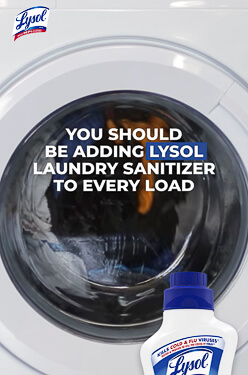
The mechanical action of the washer, dilution, and complete drying reduces levels of microbes on fabrics substantially. When someone is ill, the CDC advises that hot water with detergent is effective for cleaning clothing, bedding, and towels. In a situation where extra caution may be desired (such as laundry with vomit or feces from person with a known contagious illness), effective alternatives include using longer cycles or adding bleach.
Also, laundry sanitizers backfire the way many people use them. Most consumer laundry sanitizers rely on quaternary ammonium compounds—QACs—as their active ingredient. Because QACs are cationic (positively charged), they are chemically incompatible with the anionic (negatively charged) surfactants found in most standard laundry detergents. If mixed directly in the main wash cycle, the detergent neutralizes the sanitizer, rendering both ineffective. This is why the label instructions explicitly say to add the product to the fabric softener compartment or during the rinse cycle (often for a dedicated 15-minute rinse phase that does not align with the machine settings). Even if directions are followed precisely, it is unlikely that this microbial kill will translate into any real health benefits for consumers.
In addition to being unnecessary, these products contribute to QAC contamination in our environment. QACs are ending up in our bodies (including in blood and breastmilk) and are associated with a wide array of health harms. There is growing evidence that low levels of QACs can select for bacteria that are not only resistant to the QACs themselves but also to some critical antibiotics. Further, every laundry load treated with laundry sanitizer sends these compounds directly into wastewater systems. QACs are highly toxic to algae and aquatic invertebrates at low levels and can harm fish. They may also disrupt wastewater treatment plants that rely on nitrifying bacteria to convert toxic ammonia in sewage into safer nitrates.
Overall, laundry sanitizer is a solution in search of a problem in order to sell a product. Your laundry routine already protects you, and adding QACs introduces unnecessary harm.
Your Window Screens Don’t Need Flame Retardants
By Seth Rojello Fernández
When I shopped for retractable screens for my mid-century condo, every installer warned me that the screen would come with a chemical flame-retardant treatment— adding to both the cost and my chemical exposure. Hoping to avoid that, I checked out stationary screens at a nearby big-box store and found “flame-retarded” labels on most rolls, the same story with many online retailers. Treating inherently fire-resistant products wastes money and exposes us to harmful chemicals without providing an added fire-safety benefit. The problem isn’t the screens—it’s the interpretation of National Fire Protection Association 701 standard for commercial settings that are also often applied to residential products.

The way this standard seems to be interpreted by some manufacturers and installers, is that window screens, even those made of inherently flame resistant metal mesh, must be treated. Applying this one-size-fits-all approach unnecessarily exposing us and other creatures to harmful chemicals.
Other window treatments that might bring flame retardants to your living spaces are blackout shades and curtains. While our investigations suggest that 100% black-out materials are sure to contain flame retardants due to the flammable foam backing, there are some black-out window coverings that when properly fitted provide close to full black-out coverage and are flame-retardant free.
If you are trying to avoid chemical flame retardants, you might like to inquire with the manufacturer whether the window covering you are considering contains added flame retardants. Unfortunately, currently most governments nor ecolabels such as GreenGuard and OEKO-TEX® do not evaluate nor restrict the use of harmful flame retardants in window coverings.
Making Safer Paper Packaging

By Marty Mulvihill, PhD, Safer Made
Extended Producer Responsibility (EPR) legislation being initiated around the country and a growing demand for plastic-free packaging are driving demand for better paper packaging. However, sustainable paper packaging requires not just replacing plastic but also reinventing the materials that make paper packaging functional, ensuring they are safe, recyclable, and free from hazardous chemicals.
The adoption of EPR laws, for example California's SB 54 and Oregon's SB 582, is changing how producers design and manage their products packaging. These regulations require companies to bear the responsibility for their packaging's end-of-life, shifting the cost burden from local taxpayers to the producers, and to consumers. These laws introduce fees which penalize plastic, incentivizing more recyclable choices, especially paper and fiber-based packaging. For example, California's SB 54 mandates that all single-use packaging be recyclable or compostable by 2032, and requires a 25% reduction in plastic packaging, creating a strong market signal for paper-based alternatives.
EPR legislation focuses primarily on packaging recyclability, and it should also consider the use of potentially hazardous chemical additives. Paper packaging has relied on hazardous chemicals like PFAS (Per- and Polyfluoroalkyl Substances) to achieve necessary barrier properties against grease and water. Another synthetic additive used in paper manufacturing to improve manufacturing and performance is Polyamideamine- epichlorohydrin (PAE), a potentially hazardous, petroleum derived, wet strength additive. When used in papermaking, PAE generates hazardous halogenated byproducts 1,3-DCP and 3-MCPD, which are classified as carcinogens and can leach into food.
The new EPR legislation should create an opportunity for innovation in bio-based coatings and additives derived from renewable resources like starch, cellulose, and other natural biopolymers that can provide grease and moisture resistance without harming recyclability or human health. Sustainable paper packaging requires innovation to create functional paper packaging that is recyclable and free from hazardous chemicals.
The Antimicrobial Science Roundup

By Rebecca Fuoco
More and more studies are being published on the harms—and often, lack of benefit—of antimicrobials but are flying under the radar. In these newsletters we will be sharing notable new peer-reviewed research related to quaternary ammonium compounds (QACs) and other antimicrobials used in consumer products.
In the past month, there have been studies published finding links between antimicrobials and neurological, cardiological, and skin harms as well as antimicrobial resistance and pollution. Check them out here.
Green Science Policy Institute in the News

By Rebecca Fuoco
Below are recent news articles, blogs, podcasts, newsletters, and more that have featured our Institute’s work and expertise.
● Our paper finding that replacing old furniture lowers blood levels of flame retardantswas covered by The Guardian, Fast Company, Public News Service, MedicalXpress, Interesting Engineering, Health Medicine Network
● Popular Science interviewed Rebecca about the harms and lack of benefit ofantibacterial hand soaps.
● Architectural Digest noted our concerns about QACs in products like laundrysanitizers and cleaning products.
● The paper we co-authored on the problems of cleaning up PFAS with PFAS-based technologies was covered by Envirotec magazine.
● Environmental Health News acknowledged our successes in reducing the public’s exposure to flame retardants by changing regulations.
● Vogue Business interviewed Rebecca about how the “Gorpcore” fashion aesthetic may be popularizing clothing with added PFAS and antimicrobials.
● Everyday Health shared our advice on finding non-toxic bakeware.
● Arlene’s TEDx talk and more were featured in ACN Latitudes.
Calendar
Saturday, January 31 at 7 pm EST
Arlene will speak at the Vermont Ice Climbing festival at the Cambridge Community Center in Jeffersonville, VT following dinner and mingling at 5 pm.
Call 802-657-3872 for information and tickets.
Receive Updates By Email
Subscribe to our monthly newsletter and get these updates delivered right to your inbox!