June 2026: Trailblazing Towards a Healthier Future
In this edition:
- Arlene Blum Trailblazer Award Presentation
- We All Scream for Sunscreen
- A Safer & Better Mosquito Repellent is On the Market
- Steps to Reduce Flame Retardant Exposure in Your Car
- The News
- Calendar
Earlier this month I attended the inspiring National PFAS Coalition meeting in Tucson. The Coalition brings together communities with contaminated drinking water, alongside academic and government scientists, business leaders, and NGOs--all working together to reduce harm from PFAS. Spending time with people on the front lines of the battle against PFAS was inspirational for our Institute's work towards a healthier world.
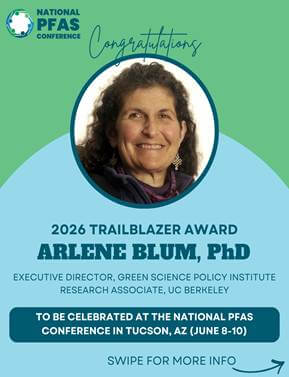
At the meeting, I was honored to receive the PFAS Coalition Trailblazer award, which "celebrates those pioneers who have demonstrated exceptional creativity, courage, and impact by forging a new path that challenged conventional thinking, opened new frontiers, and inspired transformative change in advancing PFAS understanding and/or health protective action." I was moved by the insightful introduction to our Institute’s work given by Courtney Carignan from Michigan State University, whose eloquent words can be read below.
I was also delighted when Lauren Hood, Head of Sustainability at Keen—the first outdoor shoe company to stop using PFAS—shared that the Six Classes approach formed the foundation of the company's detox strategy, and that Keen first learned about PFAS concerns from our Institute.
We are seeing encouraging progress on flame retardants. The UK, the only large country in the world still requiring flame retardants in furniture, has proposed a new standard that maintains fire safety without these flame retardants, similar to California’s updated standard. You can learn more about this change and our Institute’s contributions in the UK Sunday Times.
In the U.S., Representatives Morgan Griffith (R-VA) and Doris Matsui (D-CA) introduced the Motor Vehicle Flammability Standards Study Act of 2026, a bipartisan bill directing the National Highway Traffic Safety Administration to evaluate the fire safety benefits and the chemical harms of its 54-year-old vehicle flammability standard and to begin to the update standard.
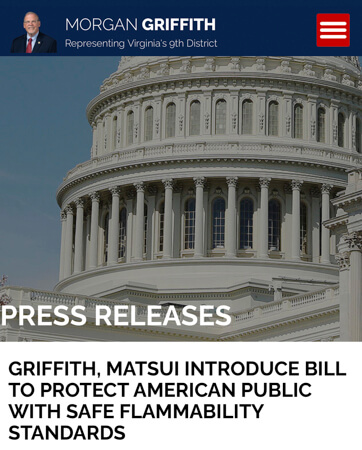
The bill has since been folded into the broader Motor Vehicle Modernization Act of 2026, which advanced through the House Energy and Commerce Committee in May by a vote of 48 to 1 and is now set for inclusion in Congress's 2026 Surface Transportation Reauthorization. The bill was based on our peer-reviewed study with Duke University, which found cancer-causing flame retardants in all 101 cars tested, representing 22 brands. These chemicals pose a health risk to drivers, passengers, and especially children.
We thank our partners for this effort, the International Association of Fire Fighters and Consumer Reports. After a decade of work to stop the use of cancer-causing, neurotoxic chemicals in cars, we are delighted to see progress at last.
We are encouraged that the bill has bipartisan support—an example of a healthy democracy! Protecting public health requires effective science, constructive dialogue, and functioning democratic institutions. That's why I continue to support nonpartisan efforts that encourage voter participation and civic engagement. I believe that preserving our own democracy is critical for our Institute’s toxics work and indeed the well-being of our planet.
I am also pleased to report growing attention to antimicrobials, which do not provide a benefit in most consumer uses, and can cause health harm and contribute to antibiotic resistance. I pitched the topic with Washington Post columnist Michael Coren while he was interviewing me about PFAS.
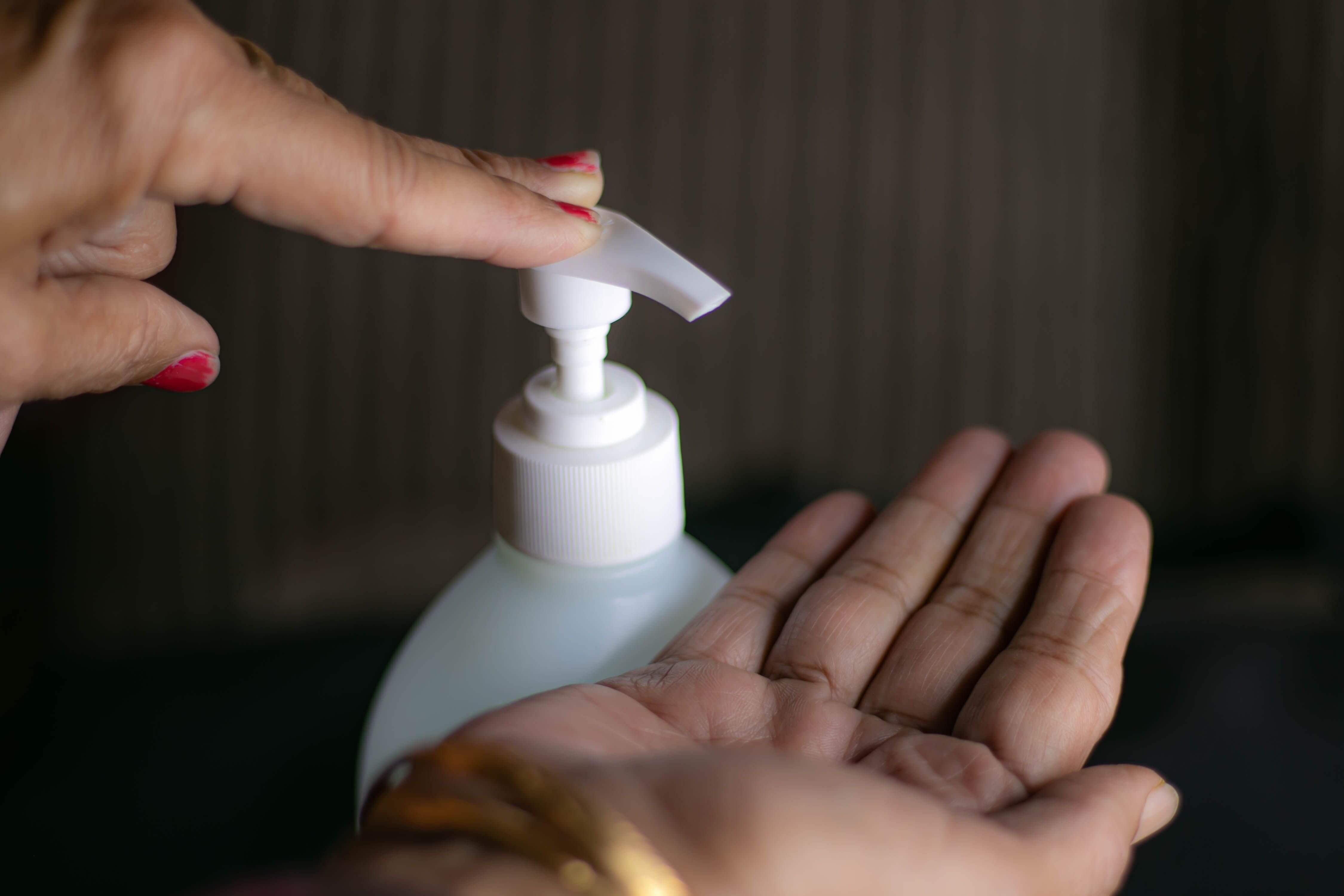
Last week he published an in-depth article, "The dirty secret in your soap: Antibacterial soap may be breeding superbugs." We are committed to ensuring that the science, policy implications and opportunities for safer alternatives reach government decision-makers, manufacturers, and the public.
On a personal note, the video documentary of Annapurna: A Woman's Place is now free to watch. It tells the story of the first all-woman and first American ascent of Annapurna I, considered the most difficult and dangerous of the world's highest mountains. I led the expedition, and filmmakers Dyanna Taylor and Marie Ashton climbed with us to capture our story. You can watch the 42-minute film on the Green Science Policy Institute YouTube channel.
Now, I am looking forward to a summer vacation snorkeling in Alor, a remote island in Indonesia, known for its rich coral reef underwater life. I'd appreciate vacation reading suggestions for favorite fiction or non-fiction books that are well written, interesting, and inspiring.
Have a wonderful rest of your summer,
Arlene
P.S. For a summer read to learn more about my personal story, you might enjoy my memoir Breaking Trail: A Climbing Life.
Arlene Blum Trailblazer Award Presentation
By Courtney Carignin, Michigan State University
My thanks to Courtney for her eloquent introduction to my award. Her words made me very happy and honored for my work with the Green Science Policy Institute.
"Tonight, we celebrate Dr. Arlene Blum, a true trailblazer in advancing global understanding of PFAS and catalyzing health-protective change.
For over a decade, Dr. Blum has been a leading force in bringing the risks of “forever chemicals” into the global spotlight. She co-authored the landmark Madrid Statement, which galvanized international awareness of PFAS persistence and harm, and she has contributed to influential research documenting PFAS in water, food packaging, cosmetics, and textiles science that directly informed policy and market shifts.
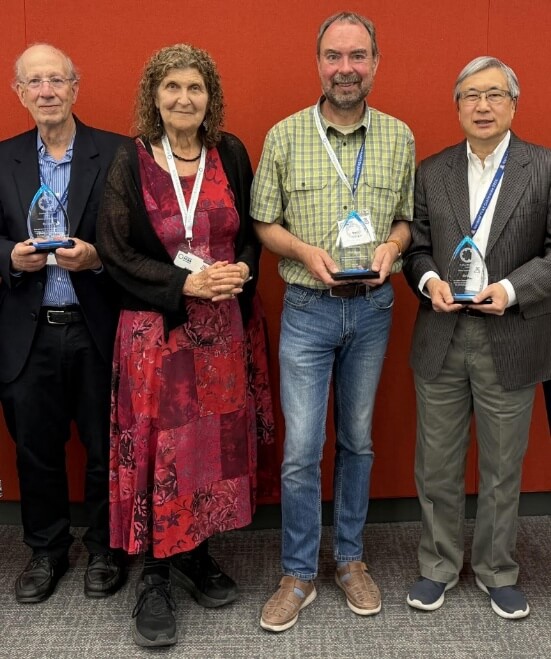
Through the Green Science Policy Institute, Dr. Blum created an innovative model for change, linking science, policy, and business to reduce harmful chemical exposures. Her leadership has helped drive the phase-out of PFAS in multiple product categories and prevented vast quantities of these chemicals from entering everyday products.
A hallmark of her impact is the pioneering “chemical class approach,” which reframed how we manage PFAS, moving beyond one-by-one regulation to addressing entire classes of chemicals. This concept has fundamentally reshaped policy and practice in the U.S., Europe, and beyond.
Dr. Blum has also built a global scientific community, convening researchers through monthly PFAS Science and Policy calls and expanding collaboration across disciplines. Through initiatives like PFAS Central, she helps ensure that the best available science is accessible to decision-makers, countering misinformation and enabling informed action.
And in fact, the innovative design of this conference in engaging many different groups around a contaminant issue has been credited to her impactful work on flame retardants.
In these ways Arlene has not only advanced scientific understanding--it has transformed how that science is used to protect public health. For her extraordinary leadership, scientific vision, and lasting impact in advancing PFAS awareness and health-protective action, it is my great honor to present the Trailblazer Award to Dr. Arlene Blum."
We All Scream for Sunscreen
With summer just beginning, we are looking for effective sunscreens that do not contain harmful ingredients. This is a challenging topic.
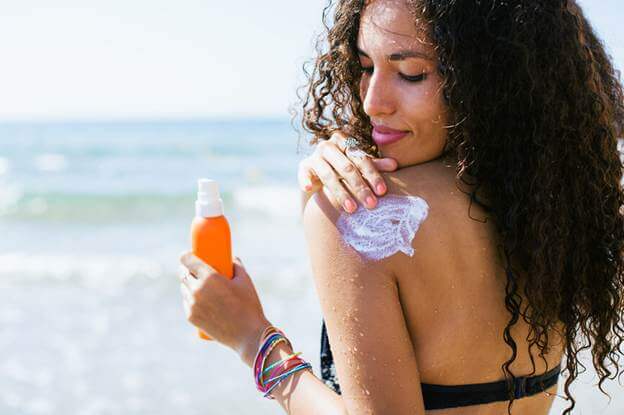
Here’s some helpful advice from Marty Mulvihill of Safer Made and our Institute’s Advisory Board: “The FDA recommends mineral sunscreens as a safer choice. They state that the only safe and effective sunscreen ingredients that meet their criteria are zinc oxide and titanium dioxide. These mineral ingredients are also the only ones considered “Reef Safe.”
A chemical sunscreen ingredient, bemotrizinol, was just approved by the FDA--its first new sunscreen approval in more than twenty years. Used worldwide, it protects against both UVA and UVB rays, and has minimal safety concerns.
Some mineral sunscreens brand recommendations: All Good, Badger, and Thinksport 50. See the Safer Made chapter on UV Filter ingredients. You can also use the free Clearya mobile app to select better sunscreens and personal care products.
You can find more suggestions for recommended sunscreens at:
- Surfrider Foundation Guide to Reef Friendly Sunscreens (2026 version)
- Consumer Reports Best Mineral Sunscreens of 2026
- National Geographic Seven of the Best Reef Safe Sunscreens (Not the spray)
Surfrider, a nonprofit focused on healthy reefs and oceans, makes the following recommendations:
- Check the label. Make sure your sunscreen does not contain the following harmful substances on the HEL list: Oxybenzone, Octinoxate, Octocrylene, 4- methylbenzylidene camphor, PABA, Parabens, Triclosan, any sort of microplastic, such as “exfoliating beads,” nanoparticles, or “nano-sized” zinc or titanium.
- Use lotions rather than spray or misting sunscreens. The propellants can be harmful to you and the environment.
A friend who leads the Surfrider Foundation in Kauai, Hawaii, shared her strategy: “I am concerned about the ingredients in sunscreens so I usually wear big hats and long sleeved shirts and stay out of the midday sun.”
A Safer & Better Mosquito Repellent is On the Market
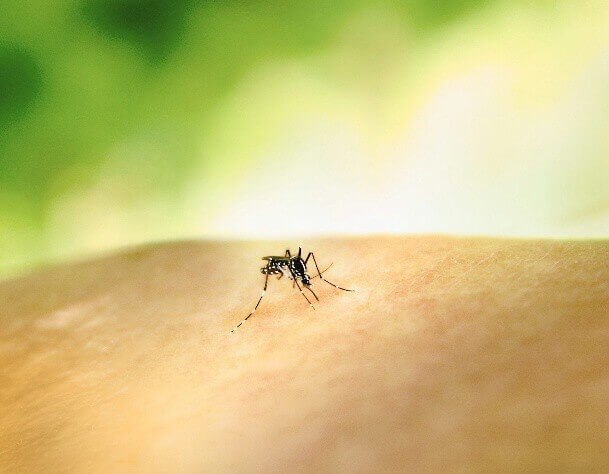
The latest Safer Made newsletter featured the company, Mimikai, which has launched the first new EPA-registered mosquito repellent based on a new and innovative active ingredient in 25 years. “Seven years of research, testing, and persistence led to the market launch of its undecanone-based formula that is safer and more effective than DEET,” says Safer Made.
Mimikai was included in Fast Company’s annual list of the World’s Most Innovative Companies of 2026. Mimikai is available online, through Amazon, in REI stores, at Credo Beauty, at Grove Collaborative, and in other locations, both physical and online.
We applaud Safer Made’s leadership in bringing healthier and more sustainable products to the consumer market.
Steps to Reduce Flame Retardant Exposure in Your Car

By Rebecca Fuoco
The introduction of the Motor Vehicle Flammability Standards Study Act of 2026 is encouraging news, and the bipartisan support it has received gives us reason for optimism. But passing legislation and updating a standard can take years. Meanwhile, our cars all contain these chemicals. The good news is that effective ways to reduce your exposure are simple and free.
Flame retardants off-gas from seat foam and other interior materials into the air inside your car, especially on hot days. Opening your windows at the start of every drive and avoiding the recirculated air mode can reduce exposure. They also accumulate in car dust, which can be ingested or inhaled. Washing your hands after being in the car, especially before eating, reduces this exposure. Regular vacuuming of your car's interior can also help.
Children are particularly vulnerable to flame retardant exposure, and car seats are a source. If you are shopping for a child car seat, look for one that is both flame retardant-free and PFAS-free. The Ecology Center's car seat report is a helpful guide.
Finally, you can add your voice to the growing call for change by signing Consumer Reports' petition urging NHTSA to update this outdated standard. More tips are on our flame retardants in vehicles page.
The News

By Rebecca Fuoco
Below are recent news articles, blogs, podcasts, newsletters, and more that have featured our Institute's work and expertise.
- This Washington Post column quotes our Institute on how antibacterial hand soaps have no benefit over plain soap and contribute to antimicrobial resistance.
- NPR recommended our PFAS-Free page on PFAS Central.
- Green Street Radio interviewed Arlene on flame retardants in cars and the bipartisan bill to fix the problem.
- An op-ed in The Conversation recommends the Institute as a resource for consumers to learn about avoiding PFAS.
- Arlene was interviewed by CBS News about a lawsuit alleging a popular clothing brand is using PFAS.
- Our Viewpoint about how antimicrobial chemicals in consumer products contribute to antimicrobial resistance has been featured in Toronto Star, Fox News, mindbodygreen, The Microbiologist, Earth.com, Study Finds, News Medical, and Open Access Government.
- Arlene explained to New York Magazine that manufacturers don’t use chemical flame retardants in foam produced for mattresses because it’s not an effective way to meet flammability standards.
Calendar
Sunday, October 4, 2026, 1-5 PM Pacific,
Vancouver, British Columbia, Canada
Arlene Blum will lead a workshop entitled "Science to Policy Change for Healthier People & Planet" at the 2026 International Society of Exposure Science (ISES) Annual Meeting. More information here.
Receive Updates By Email
Subscribe to our monthly newsletter and get these updates delivered right to your inbox!