March 2026: Weather, Wildlife, and a Healthier World
In this edition:
- Raptors Are the Solution
- Berkeley Himalayan Fair, May 16 & 17, 2026
- Useful Resources on Our Websites
- Antibacterial Hand Soap Has No Benefit, Only Risks
- Arlene and the Green Science Policy Institute in the News
- Calendar
I hope you’re doing well in spite of the extreme weather sweeping across much of the United States. “As heat blasts the Southwest, a polar vortex is forecast for the Midwest and East. Snow is expected in the Great Lakes, and an atmospheric river is on tap for Hawaii,” NBC News reported.
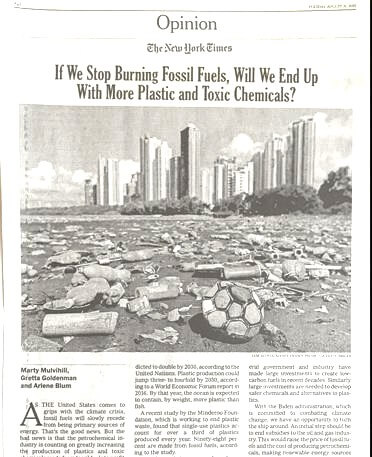
These unusual weather patterns remind us how the climate crisis is reshaping our seasons. As we discussed some years ago in our New York Times op-ed, “If we stop burning fossil fuels, will we end up with more plastic and toxic chemicals?” Our work on chemicals is intertwined with the other major global problems of climate change and plastic pollution.
New research provides an example of why our Institute’s efforts to stop the use of the Six Classes of chemicals of concern is so important. Our colleagues at Emory University found that antimicrobials called quaternary ammonium compounds (QACs) are building up inside assisted living facilities—suggesting they could similarly increasing in schools, gyms, and other places where they are routinely used.
QACs are linked to asthma, lung disease, and dermatitis in healthcare workers, as well as reproductive, developmental, immune, and neurological harms in animal studies. They can also contribute to antibiotic resistance--an urgent and increasing world heath harm."
Routine disinfection is not needed in assisted living facilities--or in homes, schools, and gyms. See my Forbes column about why antimicrobial disinfectant wipes can do more harm than good, and the information below about why antibacterial hand soaps are not needed.
Some promising news on flame retardants is that our meetings with U.S. House and Senate committee staff are building momentum for Congress to direct the National Highway Traffic Safety Authority (NHTSA) to update their 1971 standard leading to cancer-causing flame retardants inside our cars. We have bipartisan support for inclusion in the 2026 Surface Transportation Reauthorization to begin research on improving this outdated flammability standard so these harmful chemicals are no longer used inside vehicles.
While we have stopped the use of flame retardants in US furniture, they are still required in the United Kingdom. The new documentary Toxic: How Our Furniture Is Killing Us explores what is happening across the pond. I was interviewed for this film, as was whistleblower Terry Edge, a former senior government fire safety expert. You can view the trailer, wait for a wider release, or pay to watch now on Ickonic.
Another class of chemicals of great concern is rodenticides. I am honored to be on the Scientific Advisory Board for Raptors Are the Solution (RATS), an effective nonprofit dedicated to protecting birds of prey and other wildlife from being poisoned by anticoagulant rodenticides. You can learn more about their recent successes and how you can help below.
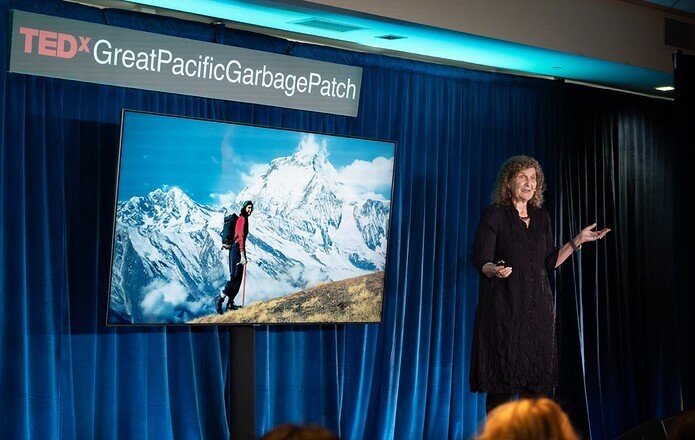
If you haven’t already I hope you will watch and share my short TEDx talk, “Climbing Towards a Healthier Toxic-Free Future,” presented at the Plastic Pollution Coalition’s Great Pacific Garbage Patch event. I draw parallels between leading Himalayan climbing expeditions and our collective climb to reduce the use of classes of harmful chemicals in everyday products. Please share.
Finally, I was delighted when Wellington Laboratories, a company that produces analytical standards used for environmental research told me that our monthly newsletters helps them stay ahead of new chemical concerns and wrote on LinkedIn: "Arlene's ongoing commitment to sharing environmental issues in a balanced, scientifically sound manner helps broaden awareness across the field." Our team has enjoyed producing these newsletters since 2007 and we look forward to continuing to do so. We hope you enjoy reading them.
Kind regards,
Arlene
Raptors Are the Solution
While you may view rats as pests; birds of prey, foxes and other wildlife—and even our beloved pet cats and dogs—see them as delectable treats. That's why rat poison can be dangerous and counterproductive.
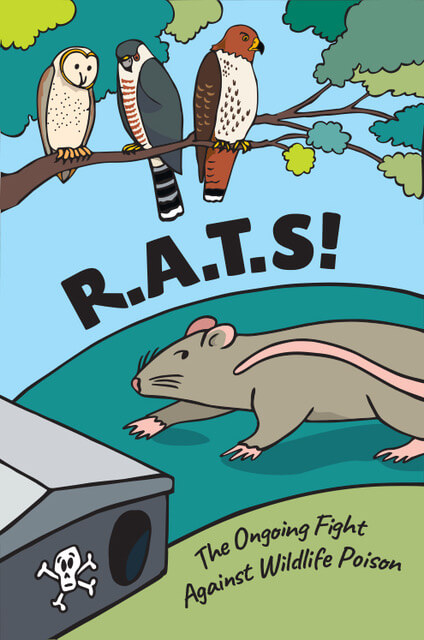
Once a rat eats rodenticide, the poison becomes a lethal part of the food chain. The poisoned rat poses a threat to wildlife, ecosystems, and our pets. In other words, rat poison isn't just rat poison. And due to lax regulation and loopholes, some of the worst anticoagulant rodenticides continue to be used.
Rat poison leads to deadly inadvertent consequences—it kills the very predators that keep the rodent population in check. A more humane solution is to protect raptors—owls, hawks, eagles—as well as other birds and predators so that they can continue to feast on rats.
That's the goal of Raptors Are the Solution (RATS), a project of Earth Island Institute. RATS was founded by Lisa Owens-Viani in the San Francisco Bay area in 2011 after Cooper's hawks began falling dead on the streets from eating poisoned rats. RATS are providing education about the beneficial role of birds of prey and other predatory wildlife and about the danger they face from the wide use of lethal rat poisons.
Over the past five years, RATS have helped pass three excellent California laws restricting the use of these poisons. Now the state is attempting to weaken these laws. You can learn how to help push back against weakening the new laws protecting raptors and other predators from rat poison here. Please consider writing a message as suggested today.
Thriving raptor populations control rat populations and help keep our ecosystems safe.
Better ways to control rats include:
- Don't let bird seed or pet food collect in your yard, garage, or home
- Close openings in your home (you can DIY or hire a pest control company)
- Remove ivy
- Pick up trash on your street
You can learn more about supporting our magnificent raptors here and from RATS new graphic novel.
Berkeley Himalayan Fair, May 16 & 17, 2026
Please join me at the 43rd annual Himalayan Fair.

You are invited to enjoy the music, dance, food, crafts and arts of the Himalayas at the Himalayan Fair, which will be held in Live Oak Park, 1300 Shattuck Avenue in North Berkeley, California on Saturday and Sunday May 16 and 17. The fair’s profits go directly to the Himalayan regions as donations to orphanages, health clinics, and other Himalayan charities. Please stop by the Green Science Policy Institute booth under the big tree northeast of the stage to enjoy the entertainment. Contact me if you’d like to help out with the fair or at my booth across from the entertainment. I describe starting the Fair in 1983 after returning from a year of enjoying Himalayan festivals while walking across the Himalayan regions of Bhutan, Sikkim, Nepal and India in my memoir, Breaking Trail. More information about the Himalayan Fair is here.
Useful Resources on Our Websites
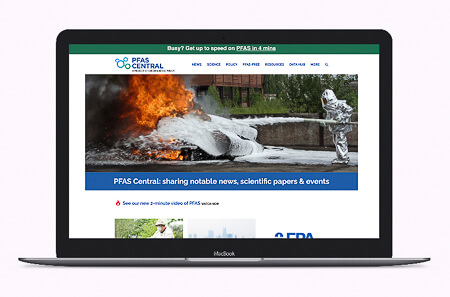
Please check out the useful information on all three of our websites as below.
GreenSciencePolicy.org has consumer tips for reducing exposure to harmful chemicals, guidance for scientists on communicating their research, our latest press releases and newsletters, our scientific publications, and more.
PFASCentral.org curates the latest news, research, policy, and events related to PFAS. It also has our popular and growing PFAS-free list of products.
Amit Mutsuddy, Director of Wastewater, East Bay Municipal Utility District told us, “The PFASCentral website is one of the most powerful resources on the web for learning how to avoid PFAS products, reduce our exposure to these harmful chemicals, and take meaningful action to protect our health and the environment. It also helps us safeguard our most precious resource: water.”
SixClasses.org provides four-minute videos on the six classes of chemicals of concern in everyday products and how to reduce your exposure: PFAS, flame retardants, antimicrobials, bisphenols and phthalates. some solvents, and certain metals. It also has instructions for manufacturers, retailers, designers, and large purchasers to avoid using whole classes of chemicals of concern in consumer products and building material.
We hope you will check out our websites and find them useful.
Antibacterial Hand Soap Has No Benefit, Only Risks
By Rebecca Fuoco
Do antibacterial hand soaps give you more protection from disease-causing germs than plain soap? The world’s leading public health authorities all agree the answer is a resounding “no”.

In 2024, the U.S. FDA conducted a communications campaign urging consumers to “skip the antibacterial soap” because there is “no data” demonstrating they provide additional protection and because “using these products might give people a false sense of security.” “What should consumers do? Wash your hands with plain soap and water.”
Current CDC handwashing guidance aligns with the FDA. The agency explicitly advises consumers to “use plain soap and water to wash your hands” because “to date, studies have shown that there is no added health benefit for consumers.” The agency also warns that “some studies have shown that using antibacterial soap may contribute to antibiotic resistance.”
In October 2025, WHO released its updated handwashing guidelines which stated its working group “unanimously agreed on plain soap as the recommended hand hygiene material” and that antibacterial soaps were “not recommended” due to concerns about health harms, environmental contamination, and antimicrobial resistance. The guidelines followed a 2025 systematic review commissioned by the organization that found no difference between plain soap and antibacterial soap in bacterial removal, which the authors state was “not surprising.”
On top of the lack of benefit, the only three active ingredients the FDA allows for use in antibacterial hand soaps—benzalkonium chloride, benzethonium chloride, and chloroxylenol—are linked to health and environmental harms. These include lung, skin, reproductive, neurological, and microbiome problems as well as antibiotic resistance. Taken together, the science is clear: antibacterial hand soaps offer no added protection over plain soap and water—and also introduce unnecessary risks that public health authorities around the world are urging consumers to avoid.
Arlene and the Green Science Policy Institute in the News

By Rebecca Fuoco
Below are recent news articles, blogs, podcasts, newsletters, and more that have featured our Institute's work and expertise.
- Arlene was interviewed by the Washington Post about the phase-out of PFAS in outdoor gear. “The new substitutes are just as good. They may only be 98 percent as good, but it really doesn’t matter in my opinion because of PFASgreat potential for harm],” she said.
- Suston magazine named Arlene as a “role model” for women’s participation in outdoor activities in the 1970s and 1980s.
- “It’s a bit like whack-a-mole,” Arlene told Mongabay in an article about PFAS. “Studying the tens of thousands of chemicals on the market today one at a time is just not feasible, but evaluating six classes or groups of chemicals of concern is much more manageable.”
- Manufacturers no longer infuse couches with certain flame retardants, a public health win that is “partly the result of activism by safer chemistry pioneer Arlene Blum,” notes Trellis.
- Our expertise on flame retardants was cited in a Babylist article about flame retardants in children’s car seats.
- Technology Networks recommends our PFAS Central website for understanding PFAS and their impacts on health.
Calendar
Wednesday, April 22, 2026, Berkeley, California
Arlene Blum will speak about her pioneering mountain expeditions in Nepal during Annapurna: A Generational Legacy, a day-long celebration of Nepal's spectacular Manang Valley at Berkeley's International House when “the Himalayas come to Berkeley on Earth Day.”
Register at www.eventbrite.com/e/1980927248726 using the 50% discount code FriendOfArlene. For questions or further information, contact [email protected].
Wednesday, April 23, 2026, The Women's Building, San Francisco, California
Arlene will participate in a fireside chat to keynote the US Green Building Council Women in Green Breakfast during SF Climate Week—bringing together leaders across sustainability, climate, and the built environment for connection, conversation, and impact.
Tickets for breakfast, fireside chat keynote, leadership panel, curated networking: https://lnkd.in/g8xfNi3r
May 16 & 17 2026, Berkeley, California
Annual Berkeley Himalayan Fair
Live Oak Park, 1300 Shattuck Avenue at Berryman, North Berkeley
Enjoy the food, music, dance, crafts and arts of the Himalayas. Profits go to Himalayan charities. Contact Arlene if you would like to volunteer to help at the Fair or her booth.
More information here.
Receive Updates By Email
Subscribe to our monthly newsletter and get these updates delivered right to your inbox!