October 2026: 80 Scientists and Counting
In this edition:
- Halloween Retro News: Flame Retardants Out of Couches & Fire Safety Increased!
- The Vancouver Statement on Antimicrobials in Consumer Products
- Welcome Our New Senior Fellow: Miriam Diamond
- A Paws for Concern: QAC Disinfectants and Pet Health
- Is the “Organic” Honey on Your Table Really Organic?
- The Antimicrobial Science Roundup
- Green Science Policy Institute in the News
- Calendar

I’ve just returned from Vancouver, British Columbia, where I enjoyed participating in the International Society of Exposure Science (ISES) Annual Meeting. It was wonderful to meet with so many old friends and scientists from all over the world who want to do research that makes a difference.
On the Sunday before the conference, I led a workshop with Miriam Diamond from the University of Toronto and Courtney Carignan from Michigan State University called “Science to Policy Change for Healthier People & Planet.”
Arlene and Anna enjoying Vancouver during the ISES meeting We shared stories of how research and effective communication helped get harmful flame retardants out of furniture and children’s products and PFAS out of carpets, food packaging, and clothing. Many participants told us they left with a new appreciation for how much communicating their science can matter.
Building on those successes, we then turned to antimicrobials and introduced the Vancouver Statement, a consensus of scientists and healthcare professionals on the hazards and lack of a proven benefit of many antimicrobial chemicals as used in consumer products.
The response was encouraging with more than 80 scientists signing on during the meeting. If you are a scientist or healthcare professional, you can read the Vancouver Statement and sign on here. Our scientists’ statements help raise awareness about the harm of chemical classes and provide a basis for policy change.
Our team also presented on our research during the rest of the conference. I gave talks on the Six Classes approach and on antimicrobial consumer products and resistance, and Anna Soehl presented our work on flame retardants in lithium-ion batteries.
Working alongside Miriam in Vancouver made this next announcement especially timely. I’m delighted to welcome her as our newest Senior Fellow. Her research on chemicals in products and the environment has shaped policy in Canada and beyond. We’ve collaborated for many years, and I look forward to all we can accomplish together. You can read more about Miriam below.
While Vancouver focused on moving science into policy, our next event looks at moving science into the marketplace. On November 11, please join us in Emeryville, California for Green Science: From Innovation to Impact, a half day long leadership forum bringing together executives, investors, researchers, entrepreneurs, and policymakers. We’ll explore how breakthrough scientific innovations can become commercially viable solutions with real business, health, and environmental benefits, and what investments it will take to move green science from the lab to the marketplace. You can learn more in the Calendar at the very end of this message.
Policy change also depends on who makes our laws. The critical midterm election is Tuesday, November 3, and the people we elect will shape environmental health policy for years to come. Please make a plan to vote, vote early if you can, and encourage your friends and family to do the same.
Wishing you a happy and healthy autumn,
Arlene and the Green Science Policy Institute team
P.S. I love speaking about my adventures in mountaineering and our scientific and policy work for a healthier world. If you’d like me to speak at your university or organization, please get in touch.
Halloween Retro News: Flame Retardants Out of Couches & Fire Safety Increased!
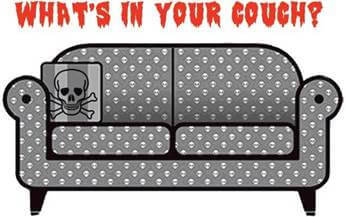
With Halloween coming up, here’s a spooky couch graphic from years past. The skulls represent the toxic flame retardants that were added to furniture foam across the U.S. beginning in 1976 to meet an ineffective California flammability standard. You can learn more from a fun Retro Report from the New York Times.
After years of research and advocacy by our Institute and others, in 2013, California updated its standards to increase fire safety without flame retardants by stopping most fires in fabric before they reached the flammable foam. And in 2021, the updated California standard was adopted as a federal furniture flammability standard for the entire country.
And this summer California’s State Fire Marshal analyzed fire data since the California standard changed and found the furniture-related fire deaths decreased by 31%— without flame retardants in our furniture! The benefits of the new standard for both health and fire safety contrasts with flame retardant industry claims that our efforts to stop the use of flame retardants in furniture would increase fire deaths.
And a recent California Department of Public Health study that we helped initiate found that replacing flame retardant furniture cut levels of the cancer-causing neurotoxic flame retardant PentaBDE by half in people’s bodies in just 15 months.
Great news for both healthy people and fire safety!
The Vancouver Statement on Antimicrobials in Consumer Products
Antimicrobial chemicals such as quaternary ammonium compounds (QACs), chloroxylenol, and silver are added to some soaps, wipes, sprays, laundry sanitizers, clothing, and building products with marketing claims of reducing harmful bacteria. Exposure rose substantially as these products multiplied during the COVID-19 pandemic, even though most offer no proven health benefit over simpler alternatives. Meanwhile, the evidence of harm keeps growing.

Over the past 15 years, the San Antonio, Madrid, and Florence Statements documented scientific consensus on flame retardants, PFAS, triclosan, and triclocarban and helped spur action to reduce their use. The Vancouver Statement, introduced at the International Society of Exposure Science meeting this month, continues that tradition. It summarizes the science on antimicrobials in consumer products and makes the following points:
- Antimicrobials are unnecessarily present in many consumer products
- When disinfection is necessary, there are already non-persistent alternatives
- QACs and similar biocides can contribute to antimicrobial resistance
- Many antimicrobials are linked to adverse health effects in human and/or animal studies
- There is emerging evidence that antimicrobials can disrupt skin and gut microbiomes
- Humans can be exposed to these antimicrobials through inhalation, ingestion, and skin absorption
- These antimicrobials are detected in human blood, breastmilk, urine, and feces
- These antimicrobials are released into the environment and can interfere with wastewater treatment
- There is a recurring pattern of regrettable substitution of antimicrobials in consumer products
We therefore call on the international community to stop non-essential uses of these antimicrobial chemicals.
If you are a scientist or healthcare professional, please consider reading the full statement and signing on here.
Welcome Our New Senior Fellow: Miriam Diamond
We're delighted to welcome a new Senior Fellow: Miriam Diamond, Professor at the University of Toronto.
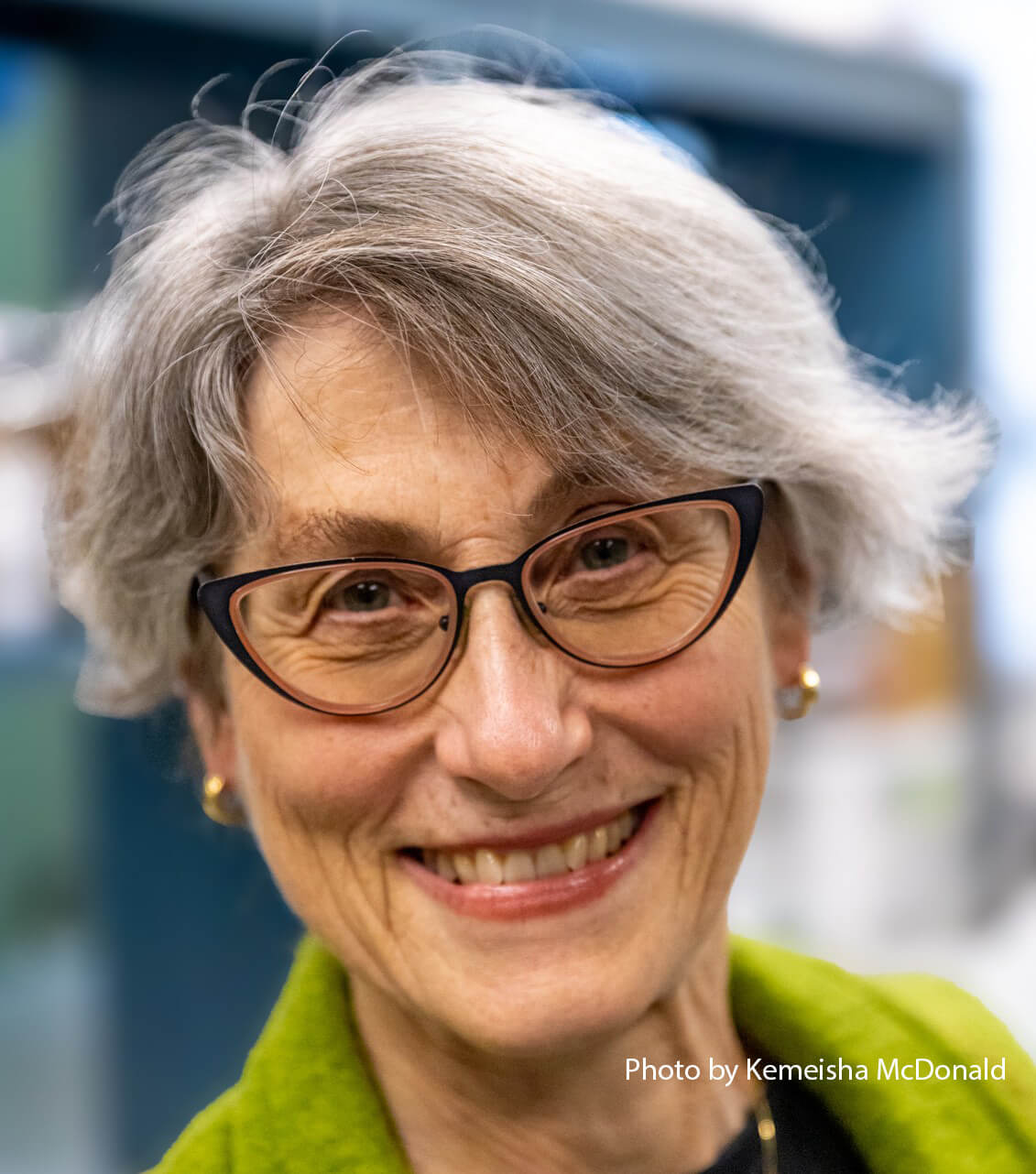
Miriam is an international expert in chemical contaminants from sources to management, gained from over three decades of conducting research and teaching at the University of Toronto. Miriam's research goal is to reduce impacts from chemical contaminants by understanding their releases through to human and ecological exposure and to translate this into preventative measures. Currently she is involved in international chemicals management.
Her science and policy research has been published in over 250 peer-reviewed articles and chapters, and over 100 short articles and reports.Miriam is a Fellow of the Royal Society of Canada, the Royal Canadian Geographical Society and the Society of Environmental Toxicology and Chemistry.
As a Senior Fellow, Miriam aims to contribute to answering the question "how can societies transition from current harmful to safer and sustainable practices focusing at a global scale and with attention to low- and middle-income countries?” She'll explore this through three case studies: transitioning from old PCB-containing electrical transformers to modernize electricity transmission systems under the Stockholm Convention, curbing antimicrobial resistance driven by antibiotic misuse in food, medicine, and products, and addressing the fast-growing problem of PFAS in waste lithium-ion batteries, which are often dumped or burned.
A Paws for Concern: QAC Disinfectants and Pet Health
By Rebecca Fuoco
Our pets spend their lives close to the surfaces we clean and disinfect. They walk across freshly wiped floors, lie on sprayed furniture, and lick their paws and fur afterward. Unfortunately, this close contact means that harmful antimicrobials in these products can end up in their bodies.
In a 2024 New York State Dept. of Health study, QACs were widespread in cat and dog feces. Dogs had roughly 10 times higher levels than cats did. The authors suggest this is partly because dogs frequently lick surfaces like floors, walls, carpets, and furniture, giving them more direct contact with QAC residue than cats get. Animals living in shelters had higher levels than pets in private homes.
This was the first study to measure QAC exposure in pets. No study has yet examined how this chronic, low-level exposure may be harming pet health. There is, however, evidence of acute poisoning of pets from QAC disinfectant products, such as a 2024 case report of a kitten that developed severe oral and skin chemical burns after contact with a QAC mold remover, requiring ten days of hospitalization. There was also a 2023 case series of two dogs that died after exposure to QAC disinfectants in separate kennel-type facilities, developing ulcerative gastrointestinal lesions, severe respiratory disease, and skin lesions.
QAC-based disinfectants appear to be widely used in veterinary hospitals and animal shelters despite the fact that these are often ineffective against non-enveloped viruses like parvo and panleukopenia. The University of Wisconsin-Madison School of Veterinary Medicine advises hydrogen peroxide over QACs in these settings and suggests that QAC-based kennel disinfectant products use false advertising claims.
Is the “Organic” Honey on Your Table Really Organic?
By Susan Kegley, Senior Fellow
When you pay extra for a jar bearing the USDA Organic seal, you probably assume someone has verified that the honey was produced far from pesticide-treated crops. For imported honey, that assurance may be weaker than you think.
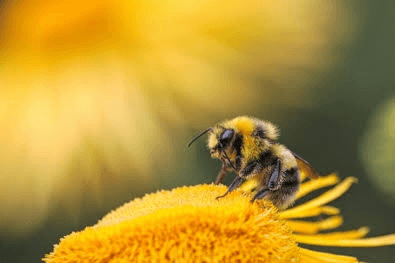
American beekeepers are effectively shut out of the organic market. USDA has never finalized organic standards specifically for honeybees. Instead, certifiers may rely on a 2010 advisory recommendation calling for a 1.8-mile certified-organic forage zone around each apiary, plus a wider surveillance zone without major contamination sources. Because bees fly freely across property lines, few beekeepers can document such a large pesticide-free area.
Yet imported honey—particularly from Brazil—can carry the USDA Organic seal. Brazilian honey certified under Canada’s organic program can be sold in the United States through the U.S.–Canada Organic Equivalency Arrangement. The honey need not pass through Canada; a Canadian-accredited certifier may approve Brazilian operations on paper. U.S. beekeepers are now challenging this arrangement in court, alleging that foreign producers receive access to an organic label that domestic producers cannot realistically obtain.
Brazil’s vast size does not necessarily isolate its bees from agriculture. The country now grows approximately 119 million acres of soybeans-mostly GMO and engineered to be resistant to herbicide sprays—whose flowers can be an important source of nectar for honey bees. Brazil’s principal honey regions include the soybean-producing southern states and the northeastern state of Piauí, a major source of “organic” honey. Piauí and neighboring states are also part of MATOPIBA, a rapidly expanding agricultural frontier containing nearly 12 million acres of soybeans. Even within the Amazon biome, approximately 20 million acres are planted to soy.
I’m with the beekeepers. A credible organic label should be based on apiary locations, surrounding land use, and residue testing not another country’s organic standards based on assumptions.
The Antimicrobial Science Roundup
By Rebecca Fuoco
More and more studies are being published on the harms—and often, lack of benefit— of antimicrobials but are flying under the radar. In these newsletters we will be sharing notable new peer-reviewed research related to quaternary ammonium compounds (QACs) and other antimicrobials used in consumer products.
In the past month, there have been studies published finding links to antimicrobial resistance as well as developmental, reproductive, neurological, and dermal harm. See our filterable, growing database here.
Green Science Policy Institute in the News
By Rebecca Fuoco
Below are recent news articles, blogs, podcasts, newsletters, and more that have featured our Institute’s work and expertise.
- The Wall Street Journal reported on the hidden chemical treatments in natural fiber clothing, interviewing Rebecca about the problematic use of QACs and silver as anti-odor treatments.
- The Guardian broke the story on the EPA's TBBPA risk assessment, quoting Arlene: "It can get into humans and contribute to cancer and behavioral harm. Infants and toddlers who crawl in the dust and put their hands in their mouths are especially vulnerable." The Cool Down and Raw Story picked up the story and the same quote.
- Dezeen covered a new Parsons Healthy Materials Lab study on plastics and toxic additives in American manufactured homes. Executive design director Jonsara Ruth pointed to our Six Classes framework as a guide to the harmful chemicals of concern. Chilean architecture magazine Estudio Arquitectos republished the story.
- CNN covered a California bill backed by Hilary Swank targeting hidden toxins in baby diapers, including QACs, and quoted Rebecca’s warning that QACs are on track to be the next major toxic chemical story. KSL republished the story.
Calendar
Wednesday, November 11, 2026, 11am-3pm Pacific
Emeryville, California
Join us for Green Science: From Innovation to Impact, a leadership forum, where Arlene will be speaking, which will bring together executives, investors, researchers, entrepreneurs, and policymakers to explore how green science can move from the laboratory to the marketplace. Speakers include Marty Mulvihill, Megan Arnett, Alison Carlson, Debbie Raphael, Jay Keasling, Michael Kobori, Julia Marsh, and Arlene Blum. Please write [email protected] if you would like an agenda for the meeting. You can Register at Eventbrite.
Receive Updates By Email
Subscribe to our monthly newsletter and get these updates delivered right to your inbox!